I’d heard a lot about Kolkata during Durga Puja. People kept telling me the whole city transforms, and that you have to see it at least once. So this year I decided to go and see the festival, and the city, for myself.
I asked my friend Anush if he wanted to come, and he tagged along. We gave it six days, from 18th to 23rd October, which covered Saptami through Dashami, the four biggest days of the puja.
This is the story of those six days: the pandals, the rajbaris, the food, and a few things I’d do differently.
The plan
| Day | Puja day | What we did |
|---|---|---|
| Day 1 (18 Oct) | Saptami | Arrived, pandal hopping in South Kolkata |
| Day 2 (19 Oct) | Ashtami | Flurys, rajbari hopping by day, pandals in Central Kolkata by night |
| Day 3 (20 Oct) | Nabami | A family bari pujo in Janai, Howrah, pandals in North Kolkata |
| Day 4 (21 Oct) | Dashami | Peter Cat, Nizam’s, K.C. Das, Visarjan at Babughat |
| Day 5 (22 Oct) | After the puja | Indian Museum, Victoria Memorial, Birla Mandir, Oh! Calcutta |
| Day 6 (23 Oct) | After the puja | Sweets shopping, flight home |
Day 1 (Saptami): Landing in Kolkata
I took a morning flight from Mumbai. It cost me around ₹7,000 one way. Anush was on a later flight, so I was on my own for the first few hours.
I landed at around 1 PM. My plan was to take the metro from Jai Hind (Airport) station on the Yellow Line, change at Noapara, and ride the Blue Line to Park Street.
That plan didn’t survive. The Yellow Line was closed and would only open at 3 PM. During Durga Puja the metro changes its timings: it runs all night, until about 5 AM, and to make up for it, it opens late.
Someone at the airport told me to take a bus instead. I took an AC bus from the airport to MG Road for ₹40, and from MG Road I took the metro to Park Street for ₹10. The hostel was a seven-minute walk from Park Street station.
Where we stayed (and why you shouldn’t)
We stayed on Park Street. Google recommended it as the most happening part of the city, and that part was true. The location was great.
The hostel was not. We stayed at Social Safari. The reviews were bad and, honestly, they were right. The rooms and toilets weren’t cleaned properly. Every other hostel was full, so we didn’t have a choice. If you do have one, avoid this place.
I checked in at 3 PM, dropped my bag, and went straight downstairs for an egg chicken kathi roll because I was starving. Then I waited in the common area for Anush, who turned up at around 5 PM.
South Kolkata pandal hopping
After a short break, we headed out for our first round of pandal hopping, in South Kolkata.
A friend of Anush’s mom is a Bengali local, and she gave us a list of the popular pandals. This was our route, in the order we did it:
- Deshapriya Park
- Tridhara Sammilani
- Ekdalia Evergreen
- Bosepukur Sitala Mandir and Bosepukur Talbagan
- Jodhpur Park Sarbojanin
- Suruchi Sangha
- Chetla Agrani
- Badamtala Ashar Sangha
See the South Kolkata route on Google Maps
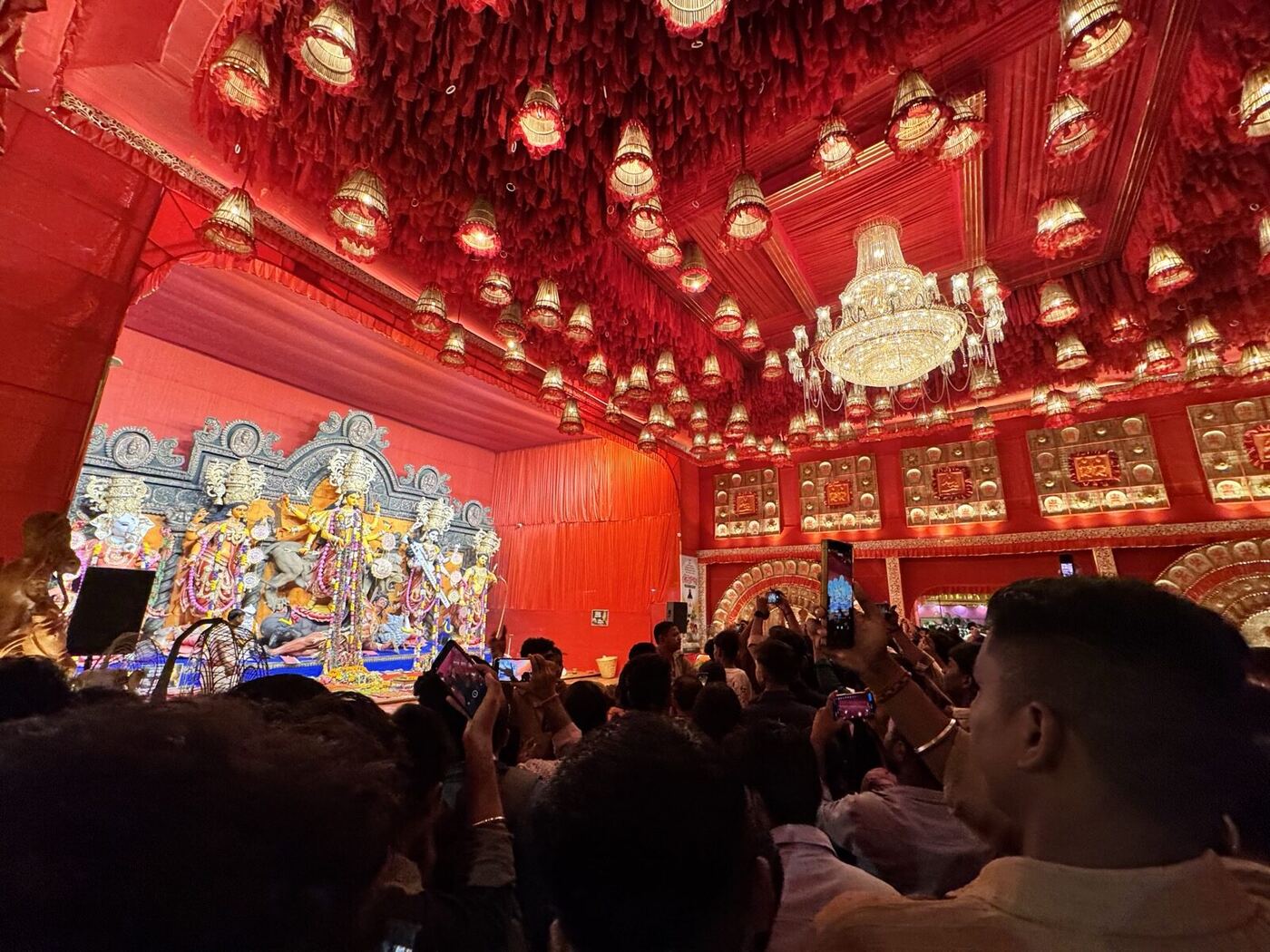
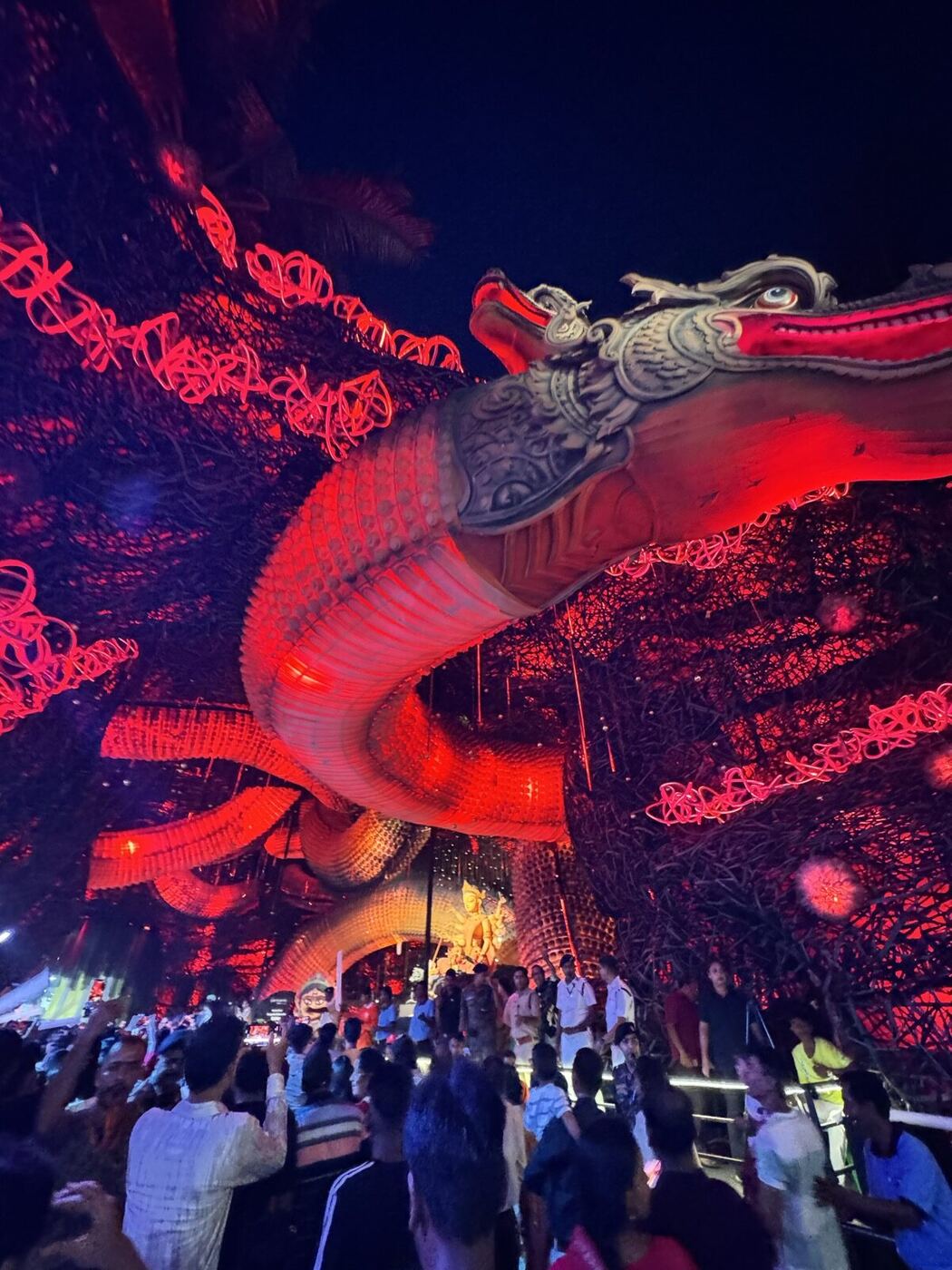
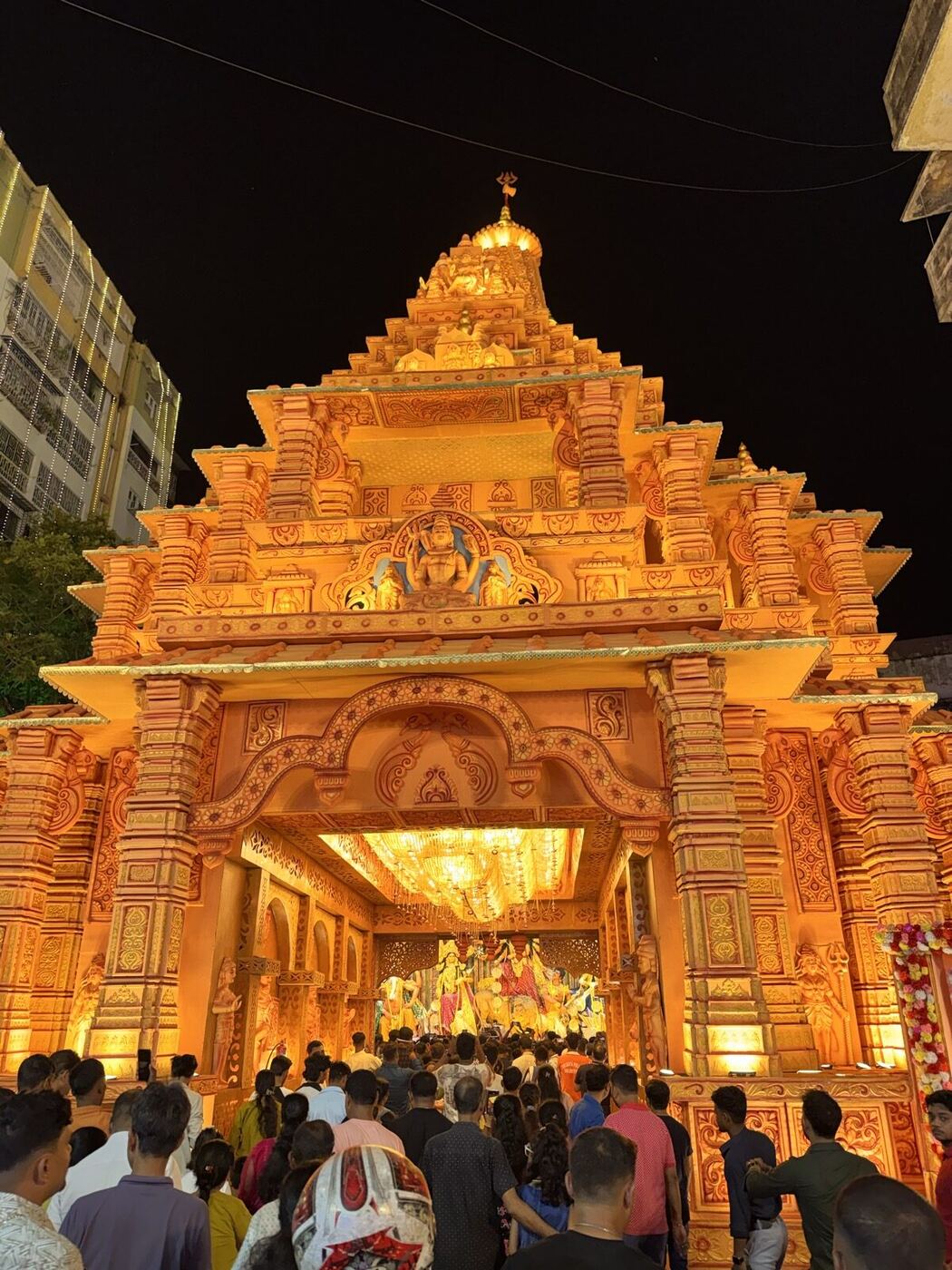
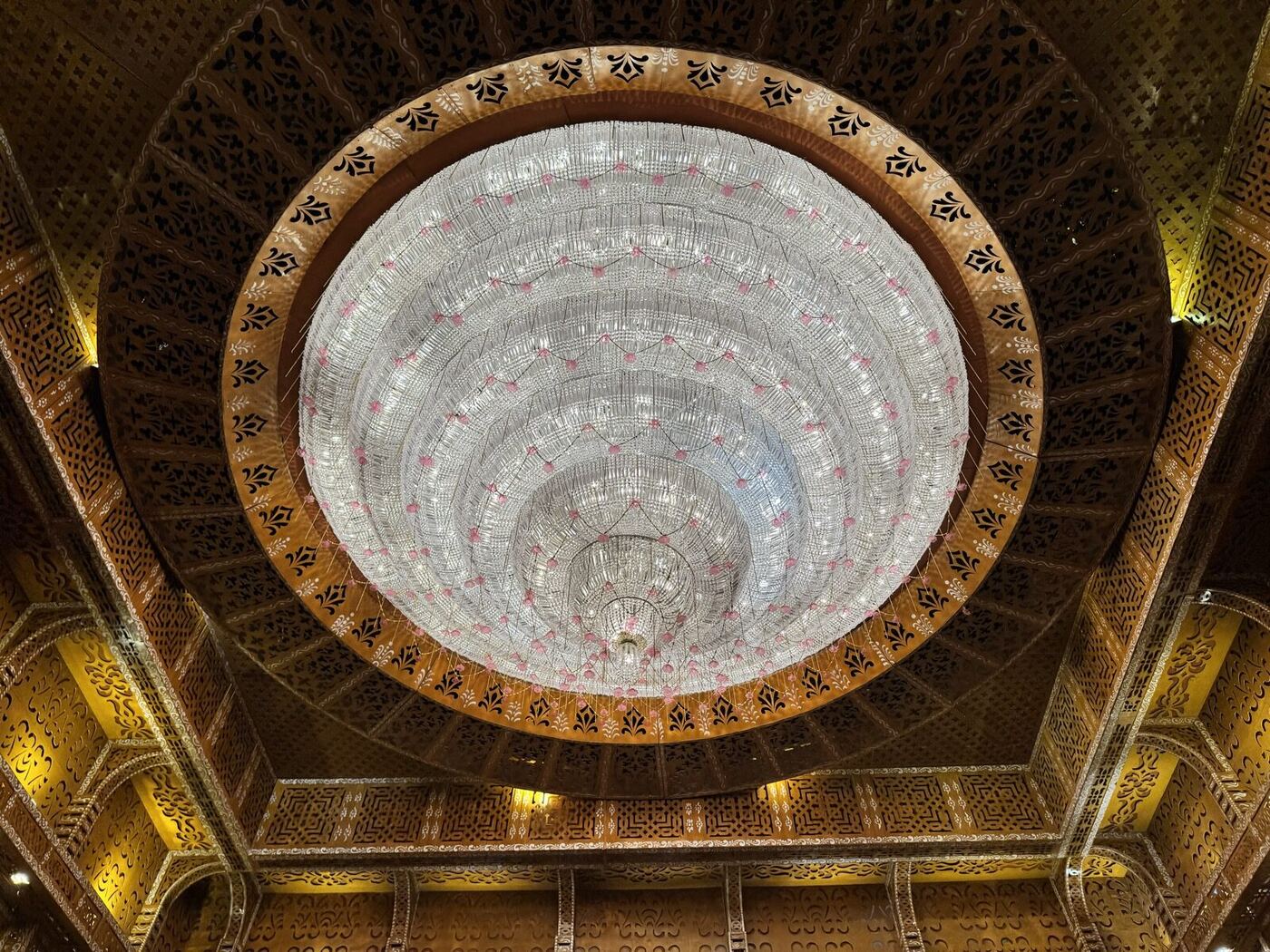
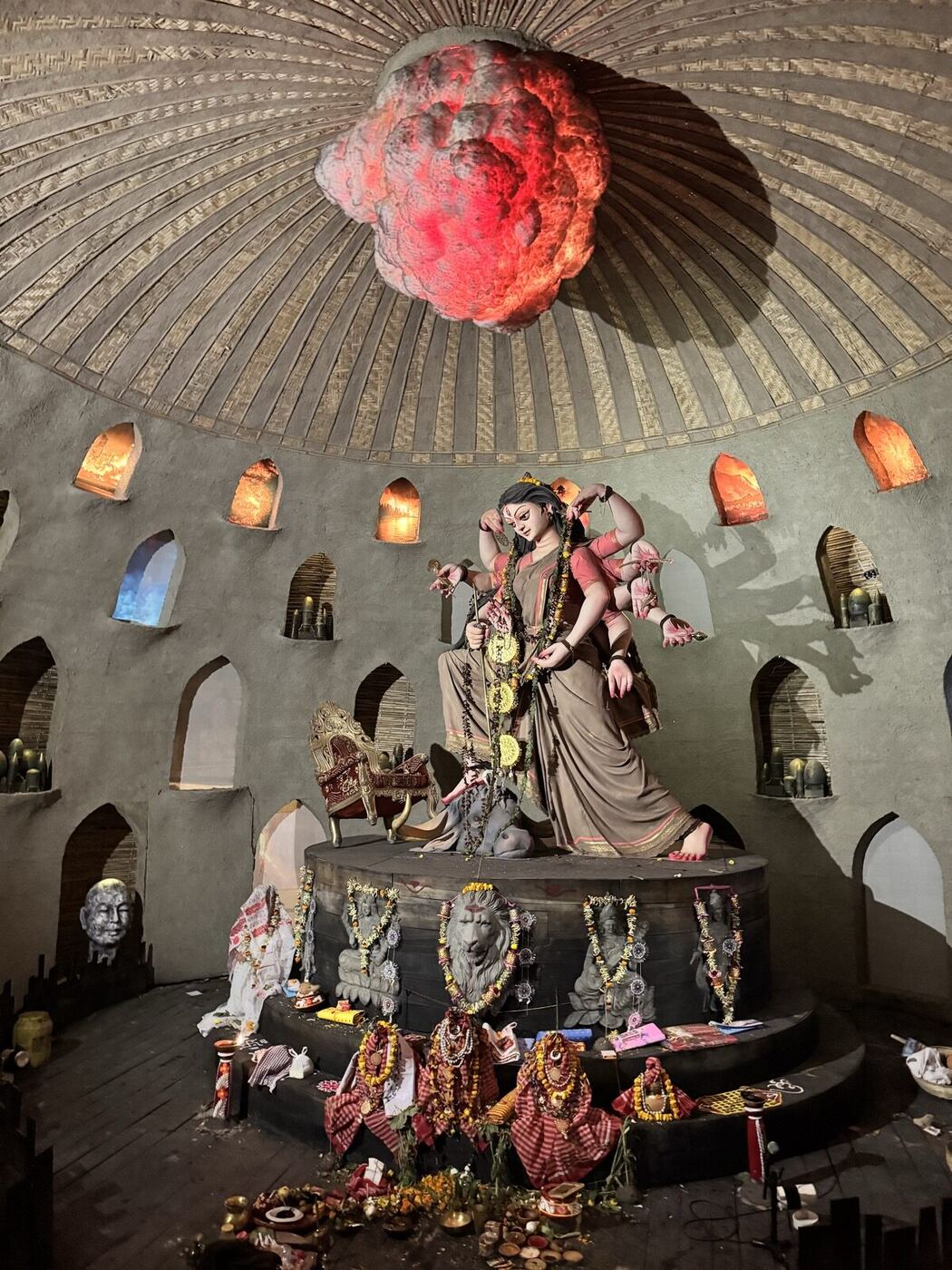
Deshapriya Park was all red and gold inside, with a chandelier hanging over the crowd. Tridhara had a huge red serpent winding over the heads of the crowd. Ekdalia Evergreen was built like a golden temple, with a giant chandelier inside.
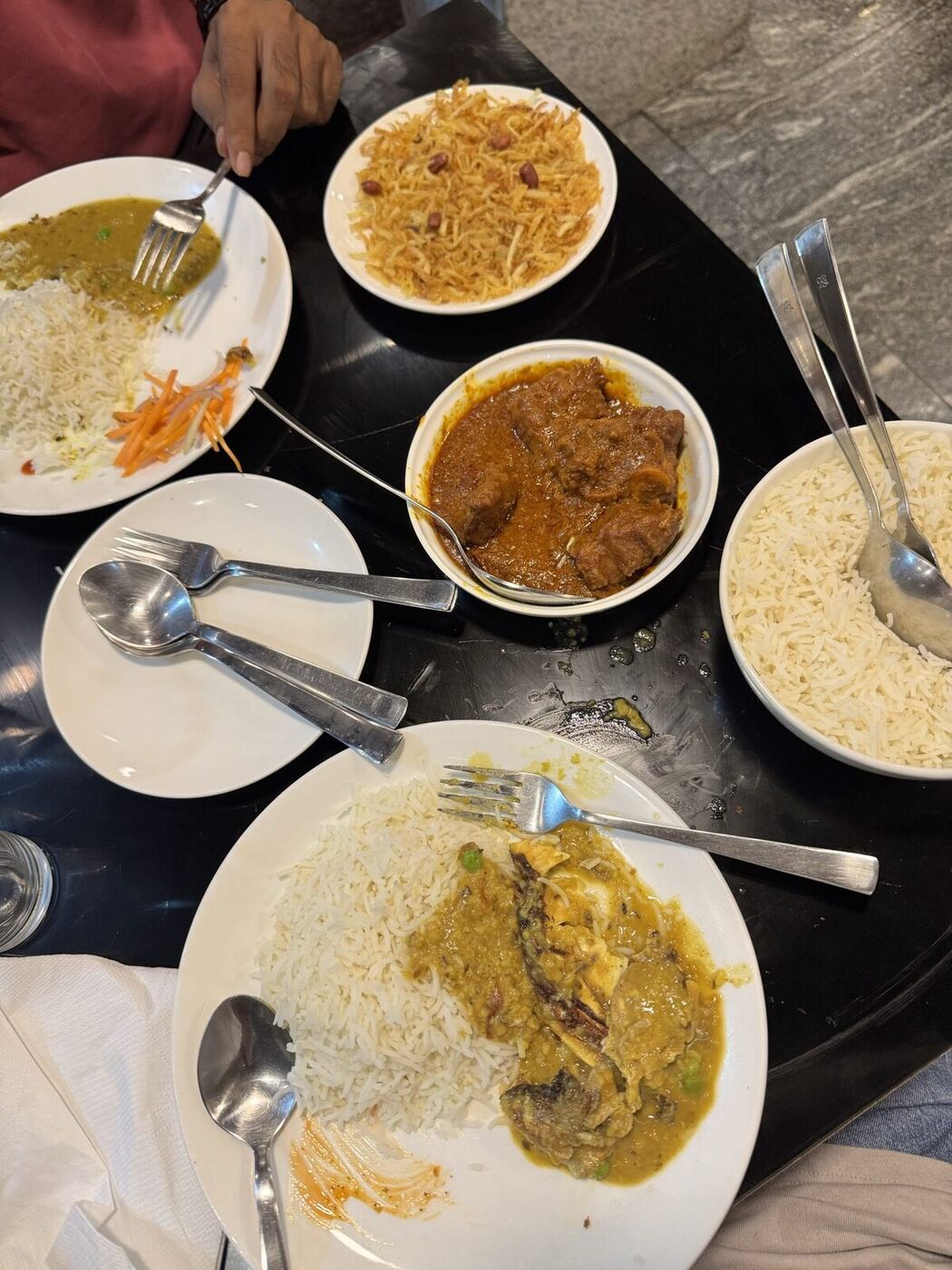
For dinner we wanted to go to 6 Ballygunge Place, but it closes at 11 PM and we showed up at 11:30. So we went to the place across the road instead, on Prince Anwar Shah Road near Jodhpur Park. It was OK. We ordered Bengali food.
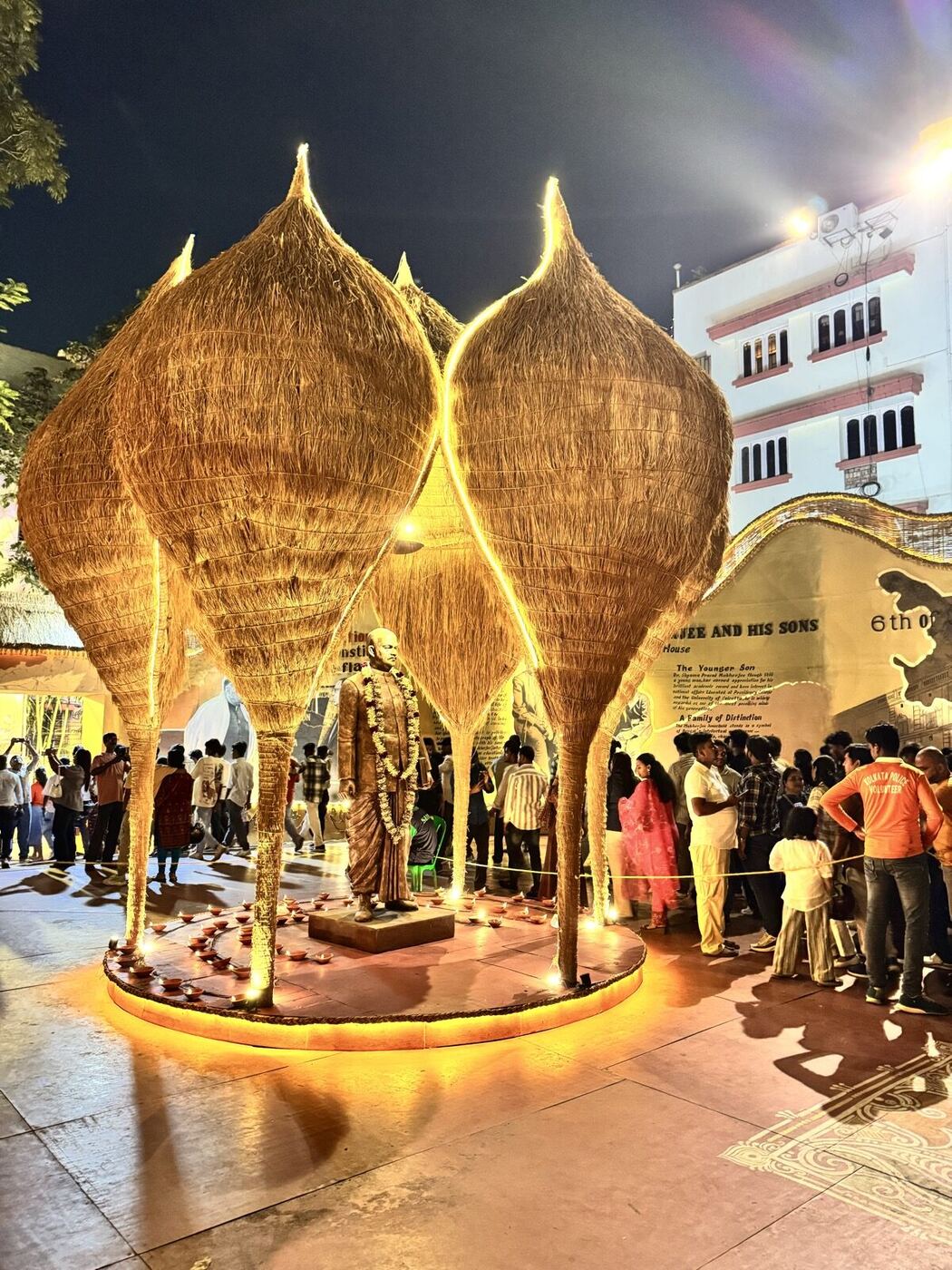
After dinner we kept going. Suruchi Sangha had giant woven-cane domes, Chetla Agrani was a tower of colourful masks against the night sky, and our last stop, Badamtala Ashar Sangha, was lined with glowing paintings.
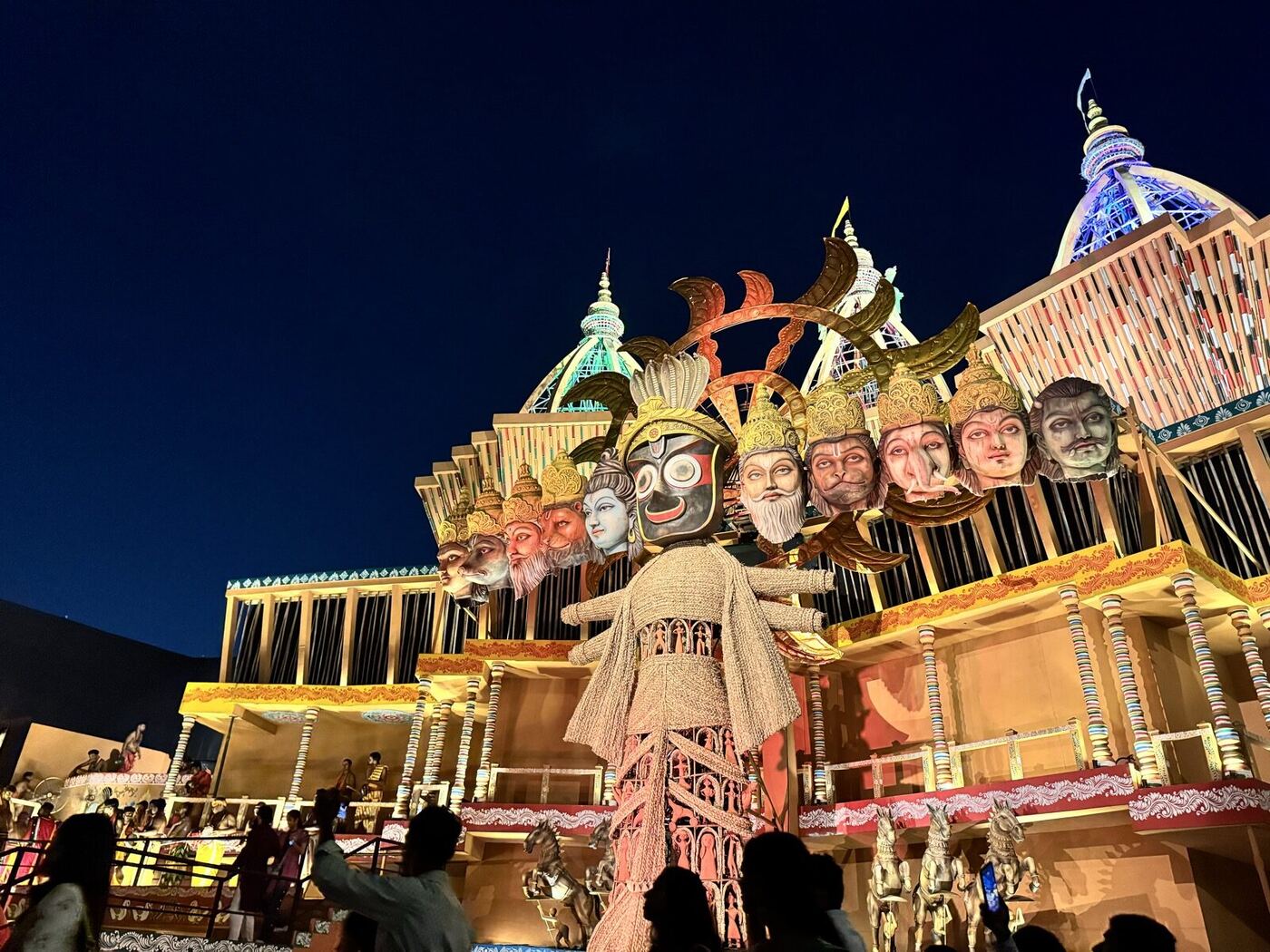
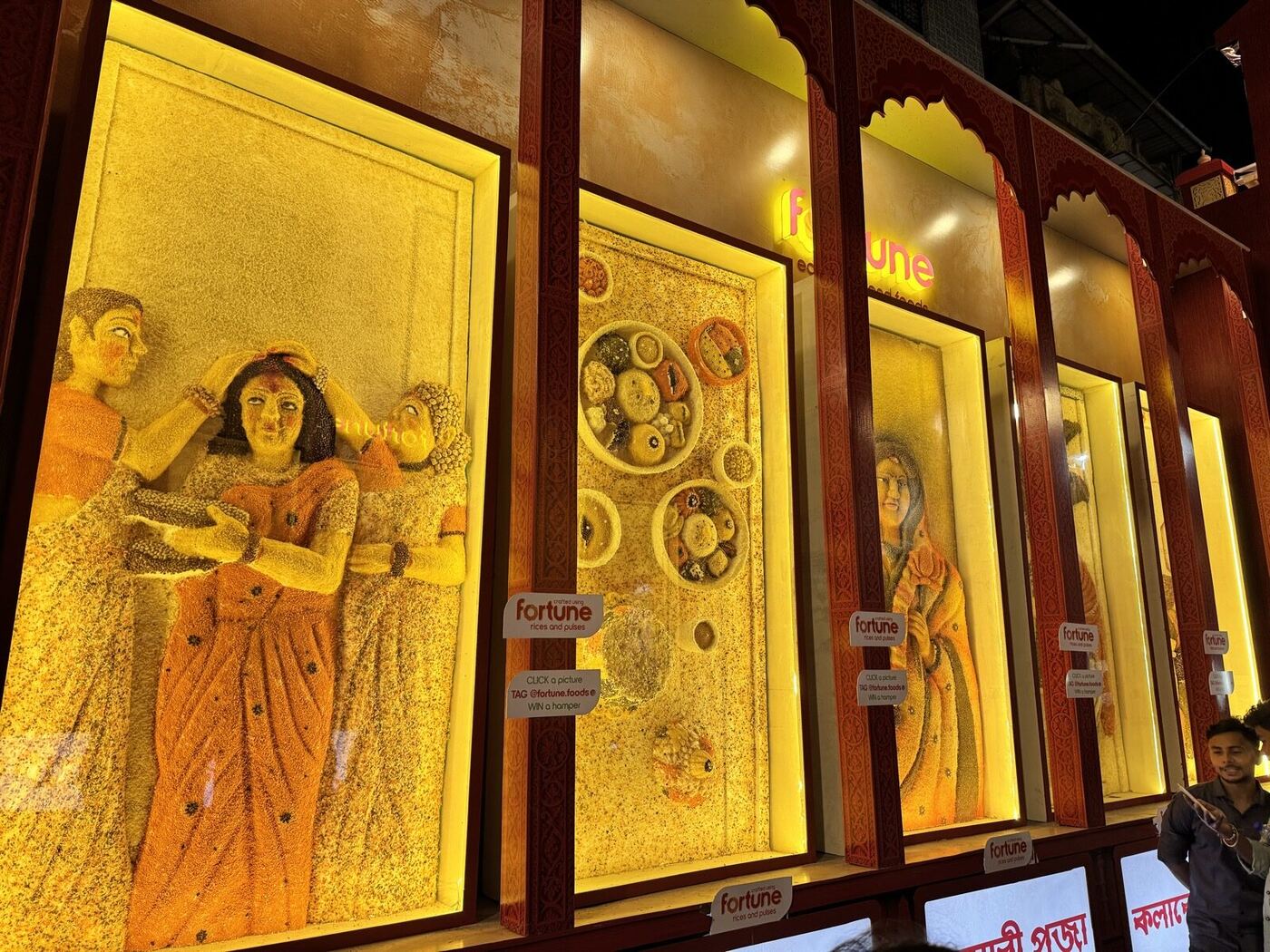
By the time we got back to the hostel it was around 4 AM.
Day 2 (Ashtami): Flurys, rajbaris and Central Kolkata at night
Breakfast at Flurys
We started the day at Flurys on Park Street. Anush suggested it. I hadn’t heard of it, but it turns out it’s a Kolkata institution, started by a Swiss couple.
It was worth it. We had coffee, breakfast and a lot of pastries. Over the next few days we went back enough times to try almost every pastry they had. :)
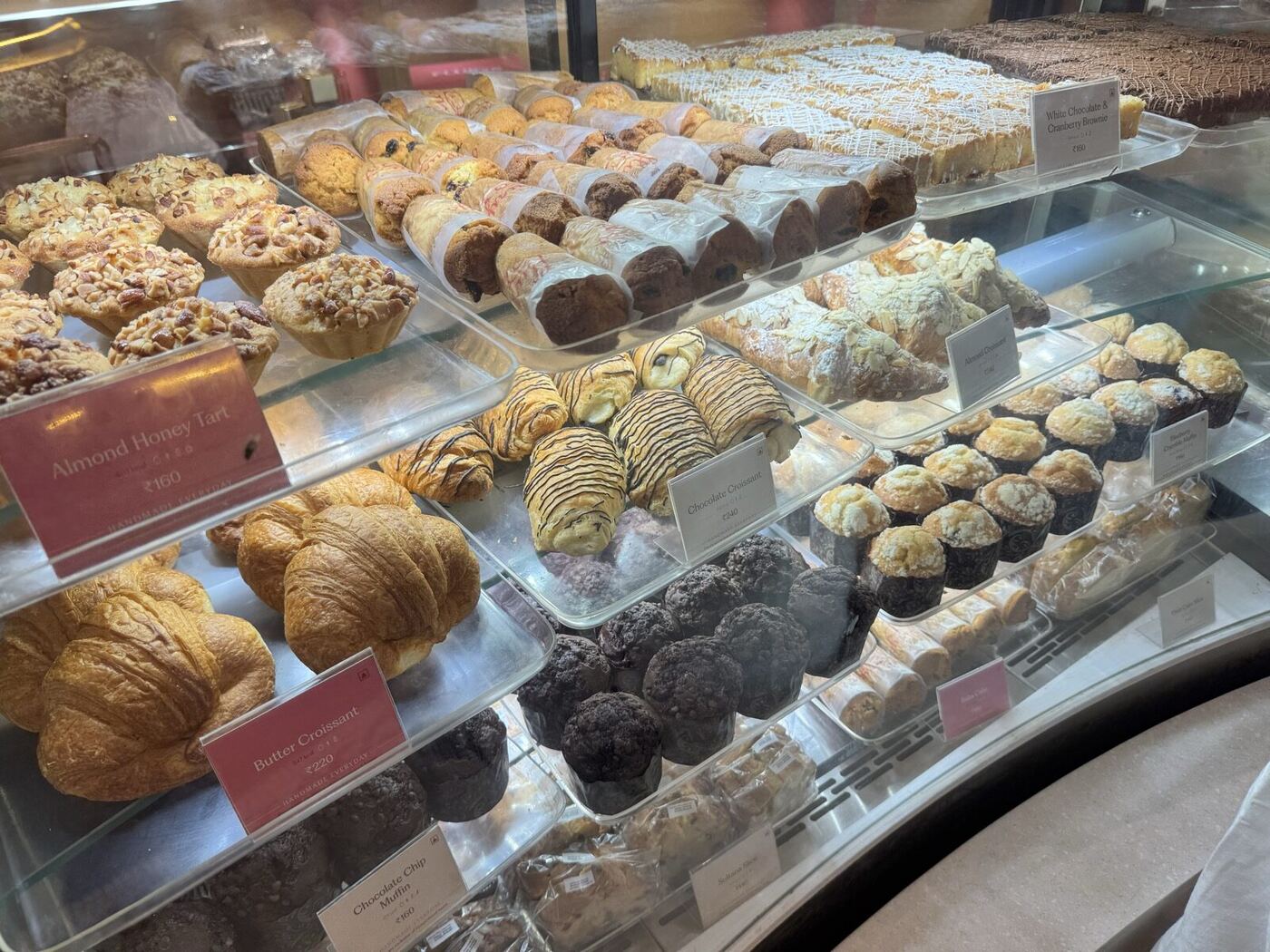
Breakfast turned into brunch, so we skipped lunch that day.
Rajbari hopping
After brunch we headed to Sovabazar. It was around 11, the metro was not running and there were no local buses either, so we took one of Kolkata’s famous yellow taxis. Sitting in one of those old diesel Ambassadors was an experience in itself. :)
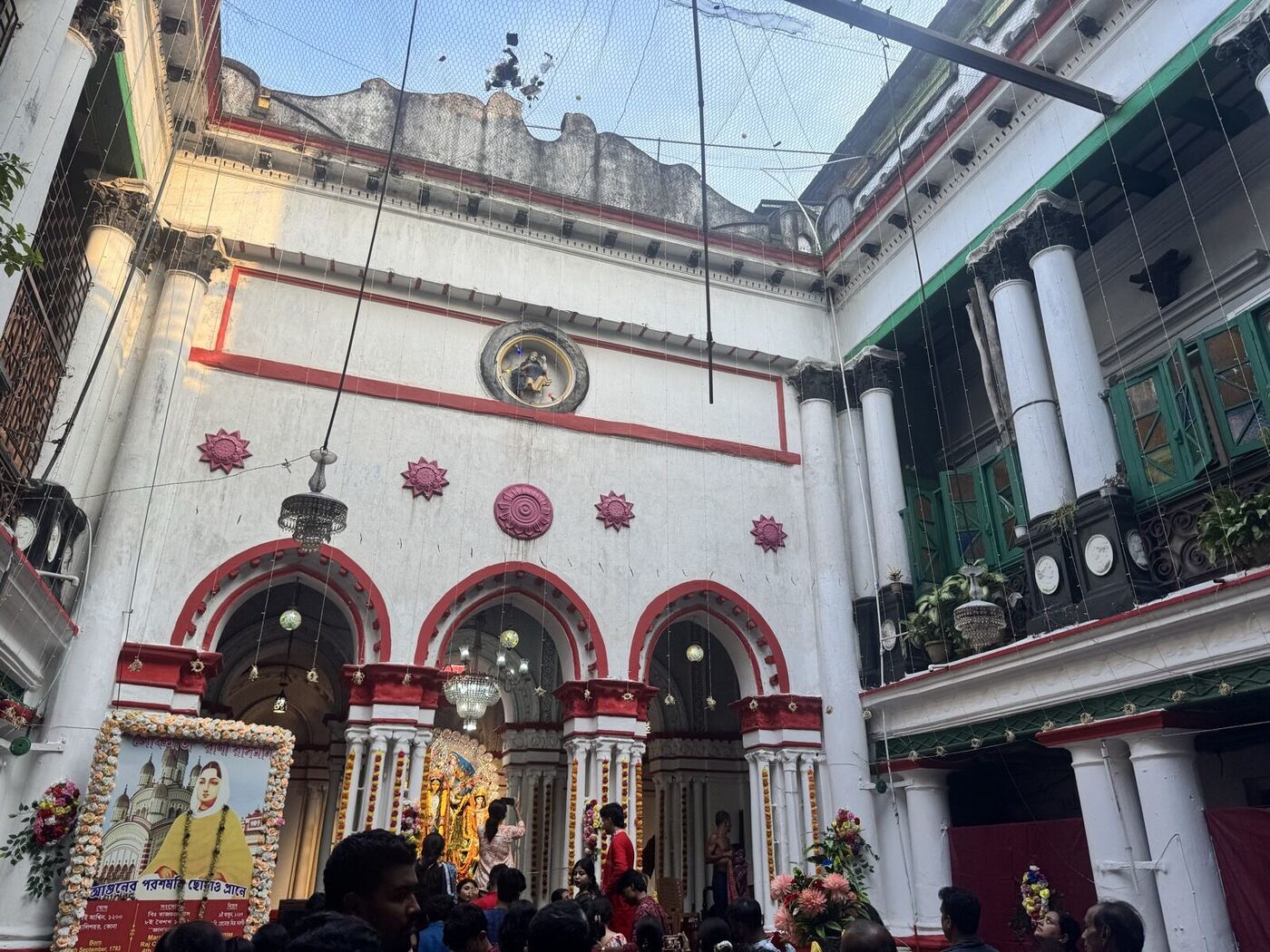
The plan for the day was rajbari hopping. A rajbari (or bari) is a big old family house, and many of these families have hosted their own Durga Puja for decades, some for centuries. The pujos are open to the public, and over the years some of them have become famous in their own right.
It was interesting to walk through these houses: the architecture, the courtyards, and the family lineage hung on the walls in old photo frames.
These are the baris we visited:
- Zamindar Bari Pujo, near Sovabazar
- Sovabazar Rajbari
- Hathkhola Dutta Bari
- Darjipara Mitra Bari
- Janbazar Rajbari
- Chorbagan Mitra Bari
- Chhatubabu-Latubabu’s Pujo
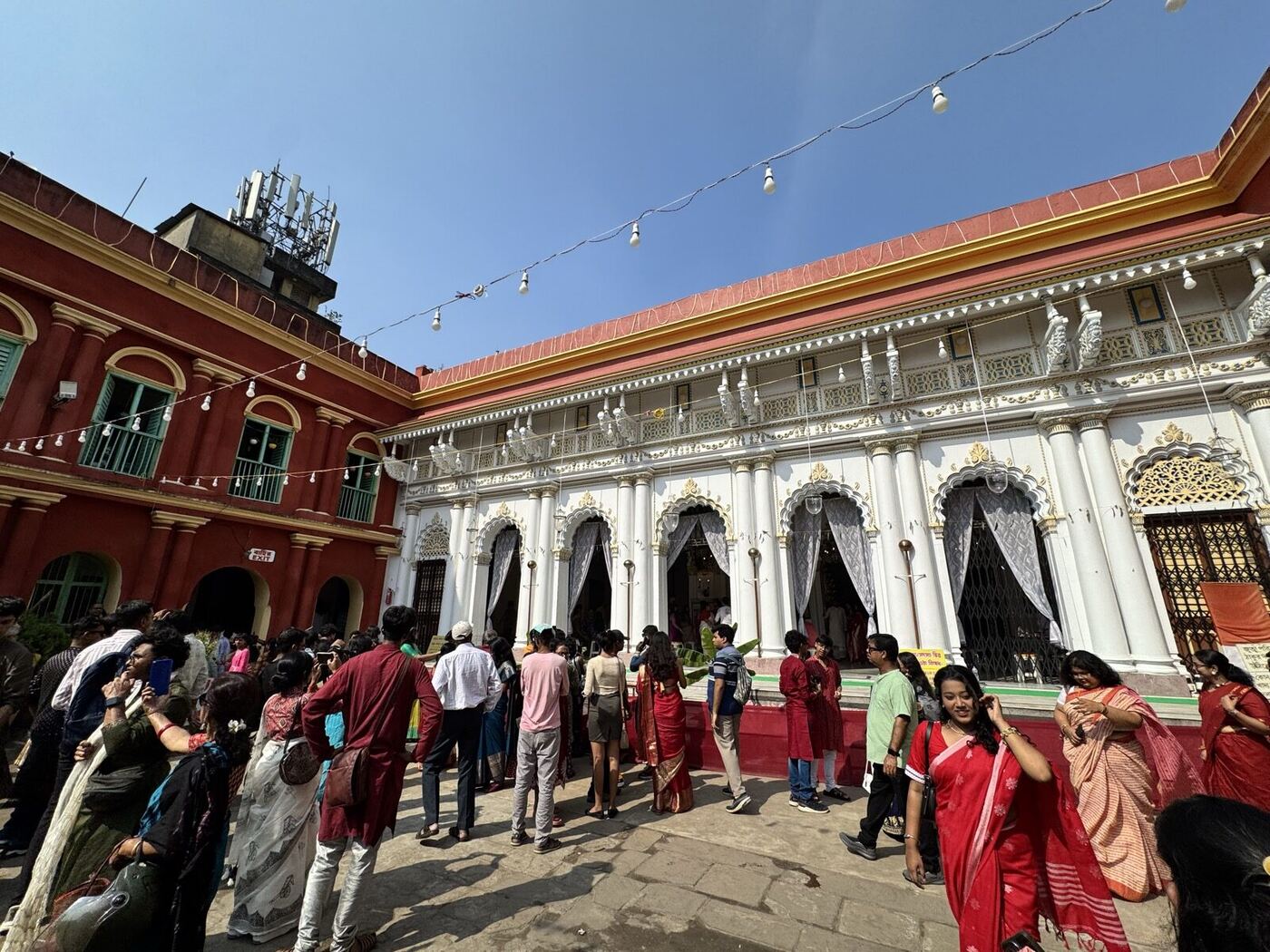
We did this until about 3 PM. On the way back we stopped at Flurys again for more pastries (told you), then rested at the hostel. We wanted to save our energy for the night, because pandals look far better after dark, with all the lighting.
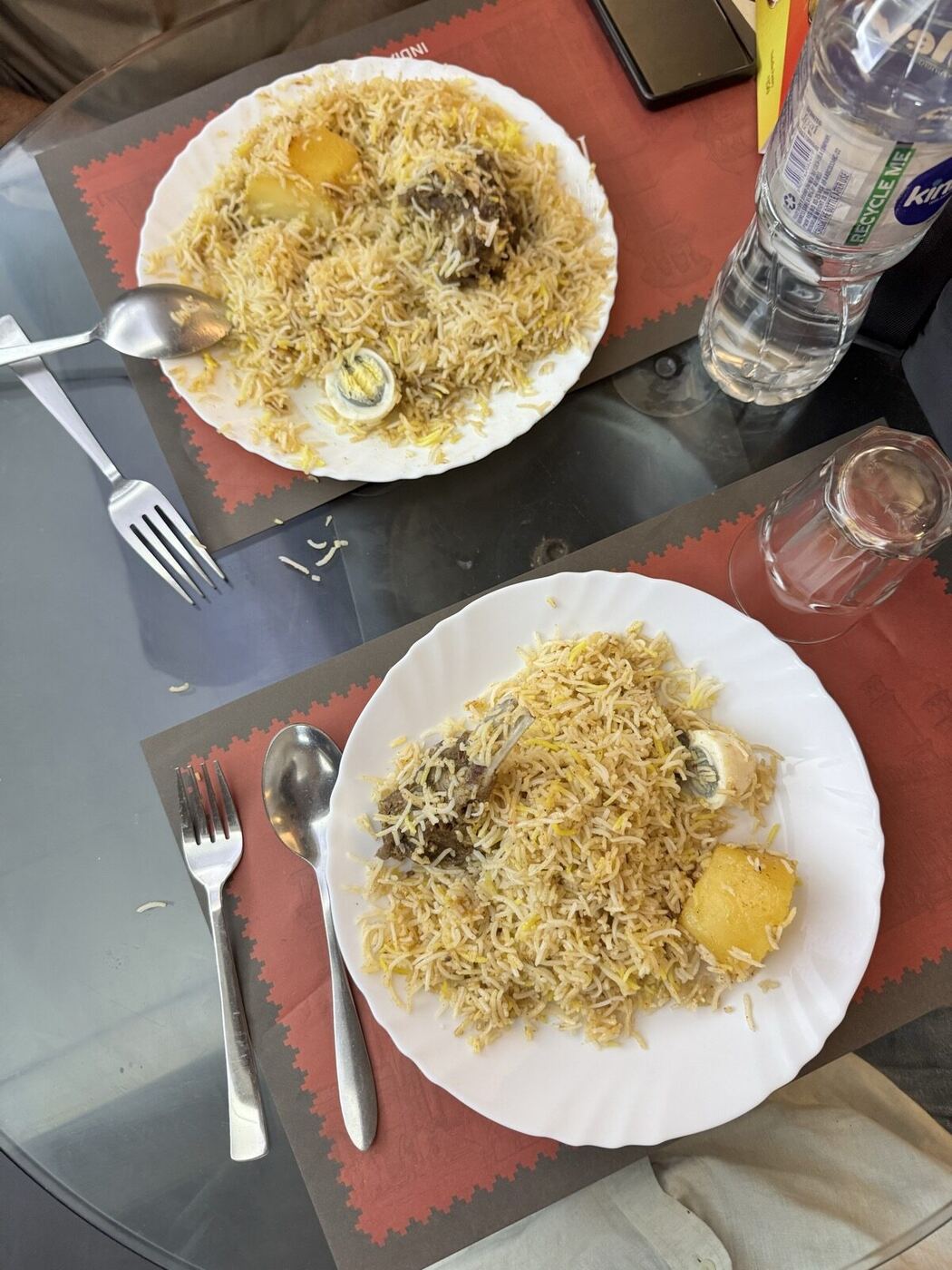
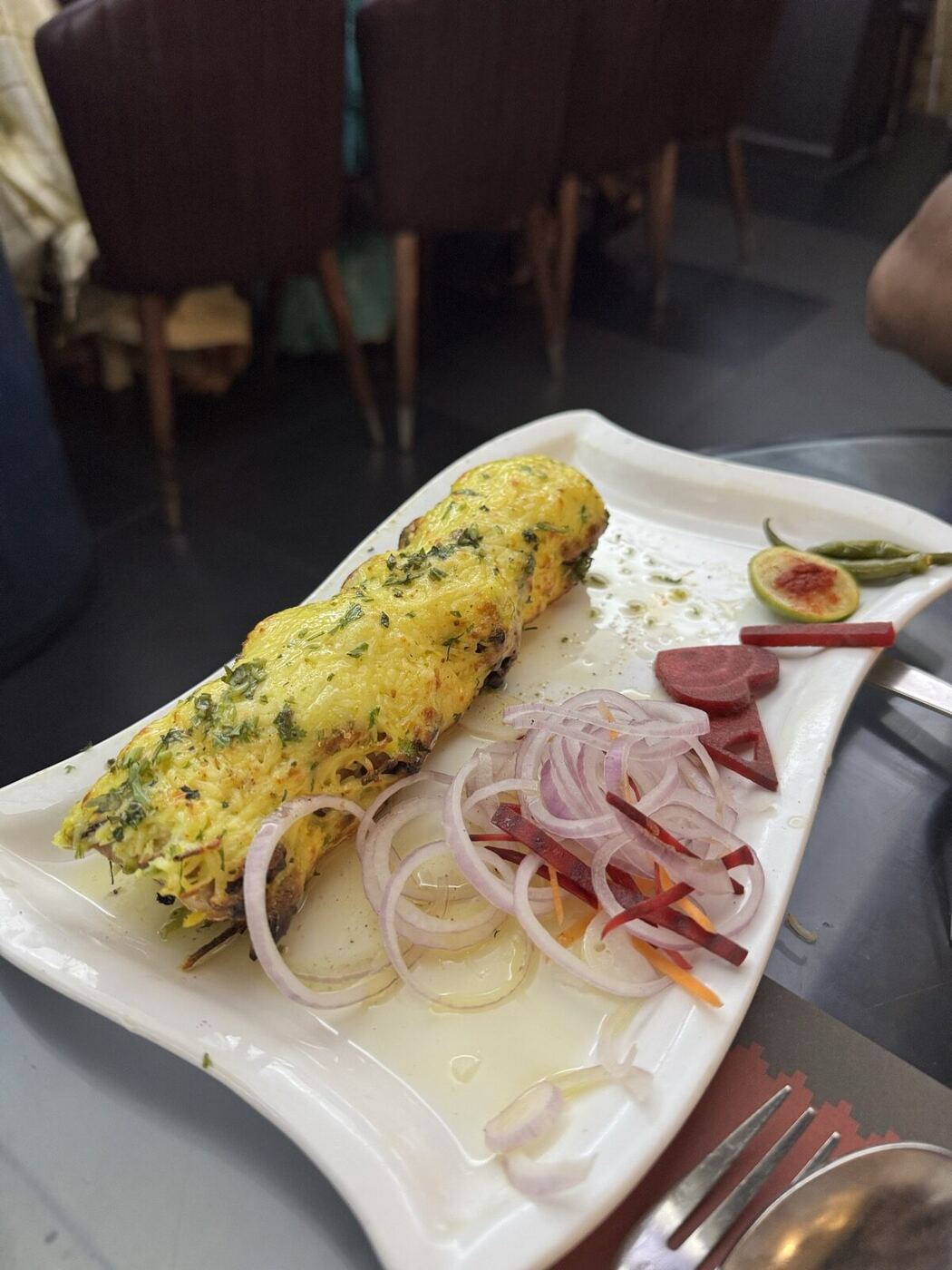
Arsalan biryani
Before heading out again, we went to Arsalan on Park Street for the famous Kolkata biryani, and ordered the Arsalan special kebab too.
Both were really good. I never thought a potato in a biryani could taste this good. If you’re in Kolkata, give it a try.
Central Kolkata pandal hopping
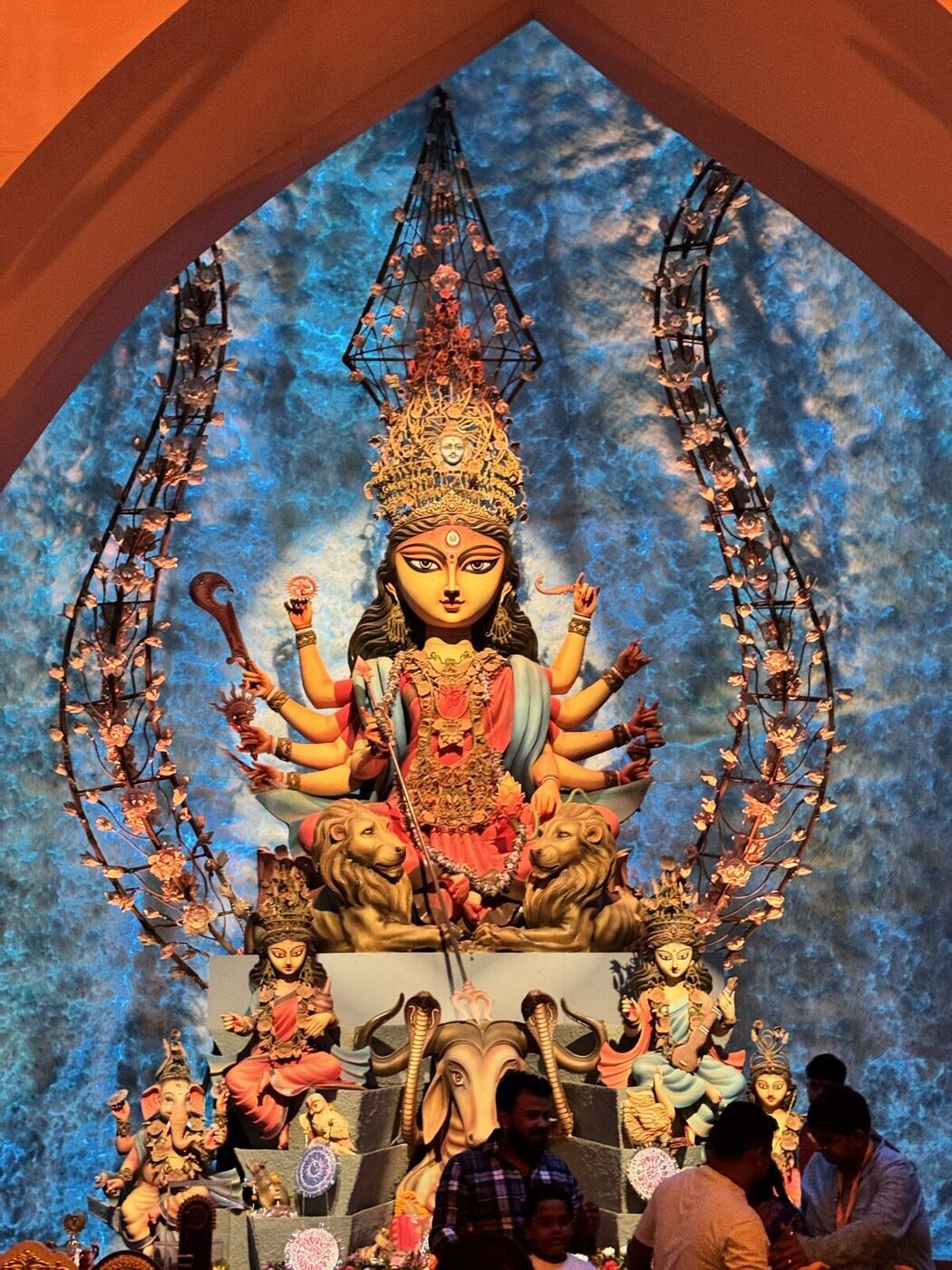
Then we went pandal hopping in Central Kolkata:
See the Central Kolkata route on Google Maps
We wanted to see Chorbagan Sarbojanin too, but it was closed. There had been a stampede there a couple of days earlier.
The idol at Allen Park sat against a wall of blue and gold. Santosh Mitra Square had built a fort, complete with the Indian flag, and the crowd there was massive.
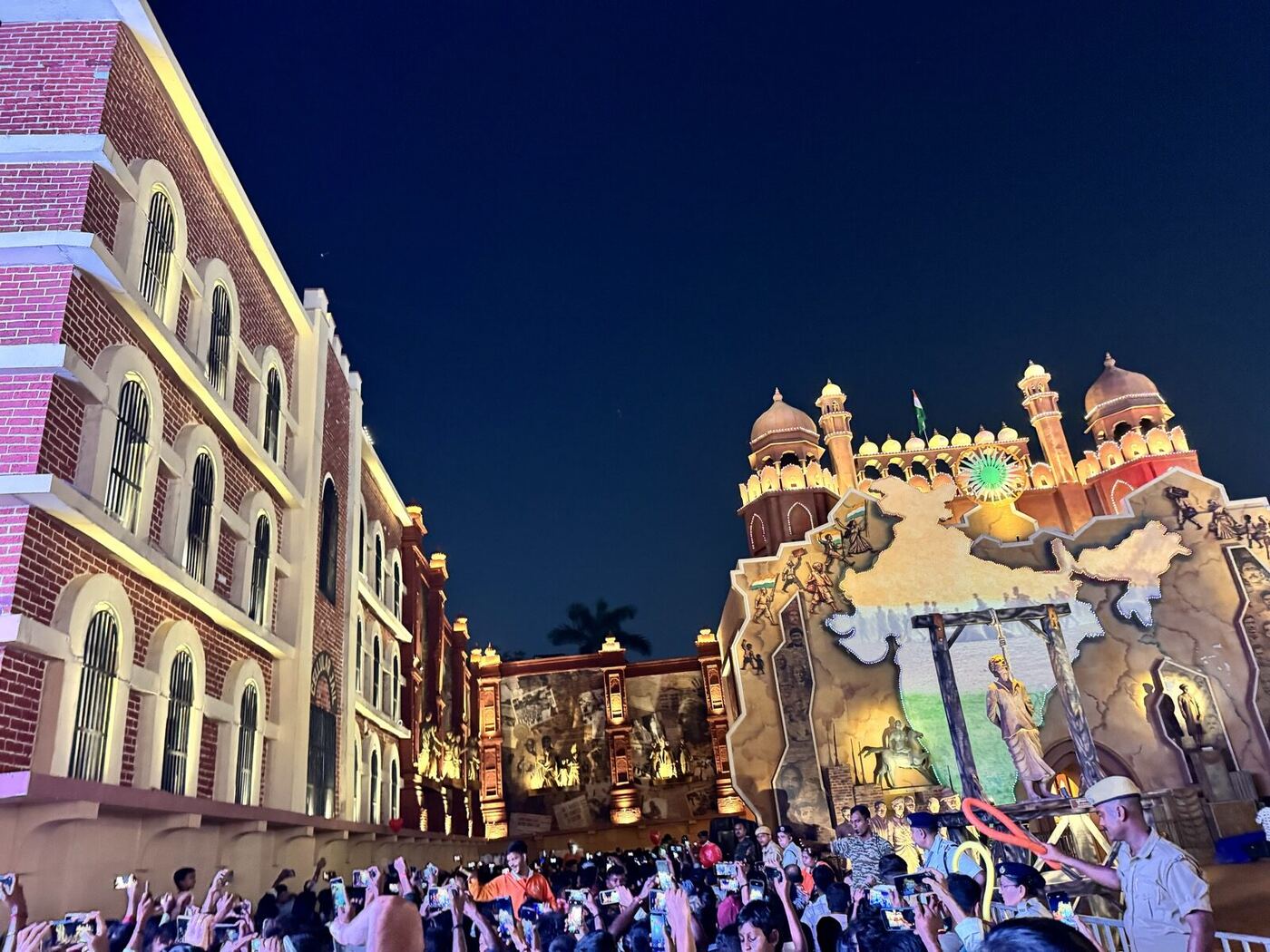
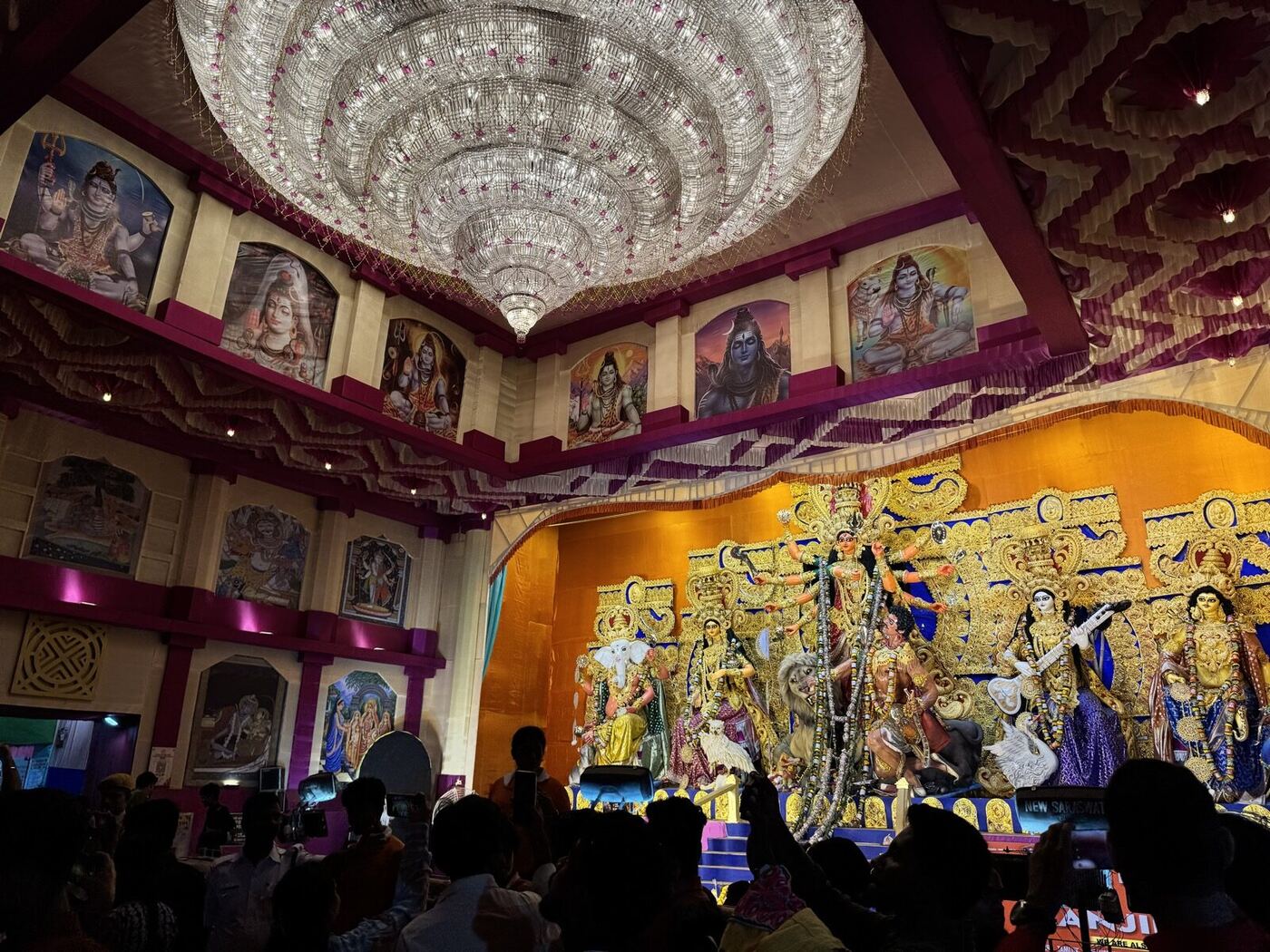
We got back to the hostel at around 2 AM.
Day 3 (Nabami): A family pujo in Janai, and North Kolkata
A bari pujo outside the city
The next day we went to a different kind of rajbari. This one was Kalibabur Bari, a friend of a friend’s family house in Janai, on the outskirts of Kolkata in Hooghly district.
We took an Uber from the hostel. It was about an hour’s drive. When we got there, we met the owner of the house, and he gave us a tour of the whole place, explaining the idol and the rituals of their pujo. The house was huge and old, and from the roof you could see the whole compound.
After the tour, we were served the pujo bhog, the food offered to the goddess and then shared with guests. It was served on leaf plates, and it ended with nikuti, a long, syrupy fried sweet, alongside the payesh.
We were also given two sweets to take with us: sandesh, and monohara, a speciality of Janai that you can only really get there. :)
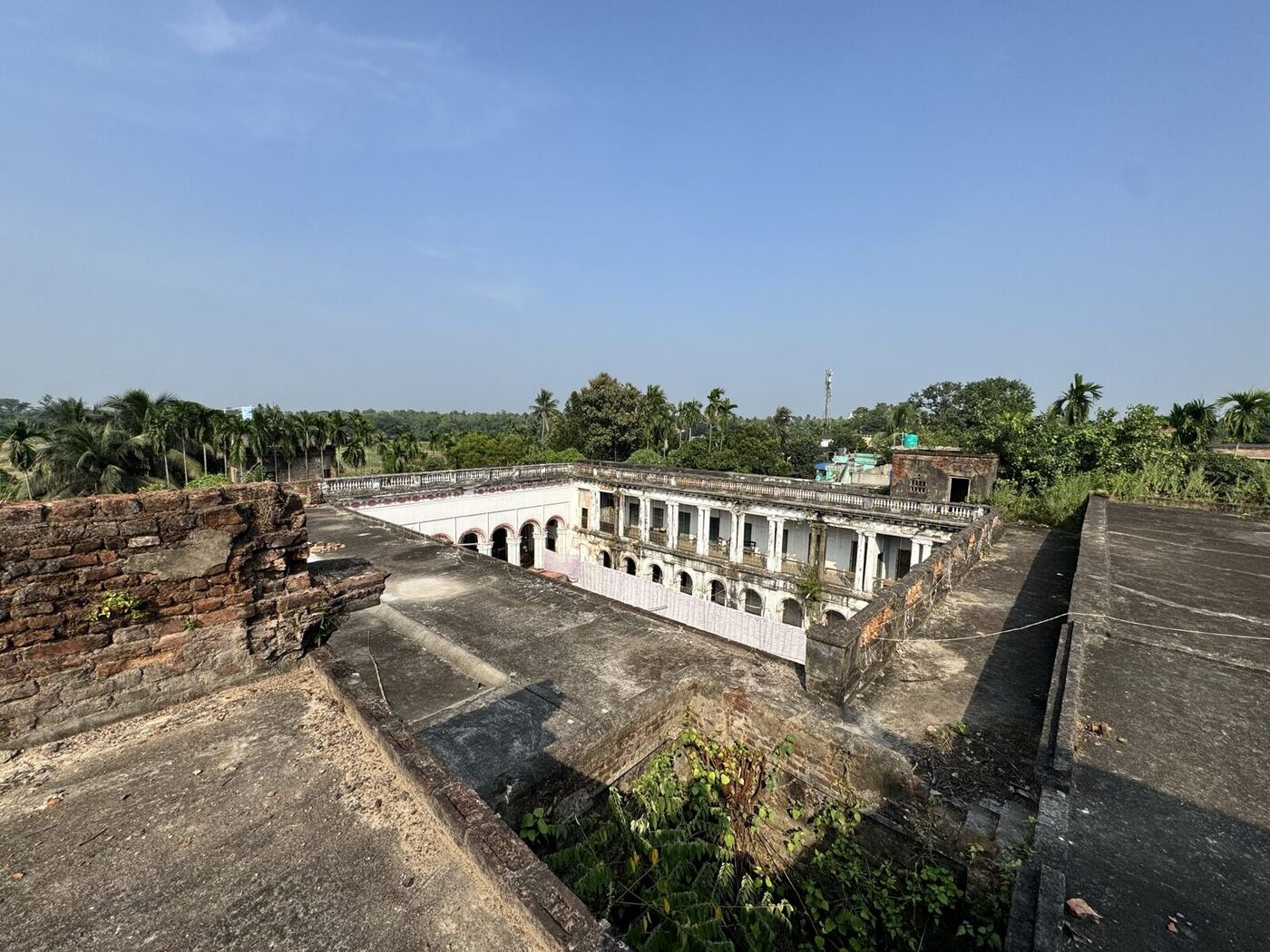
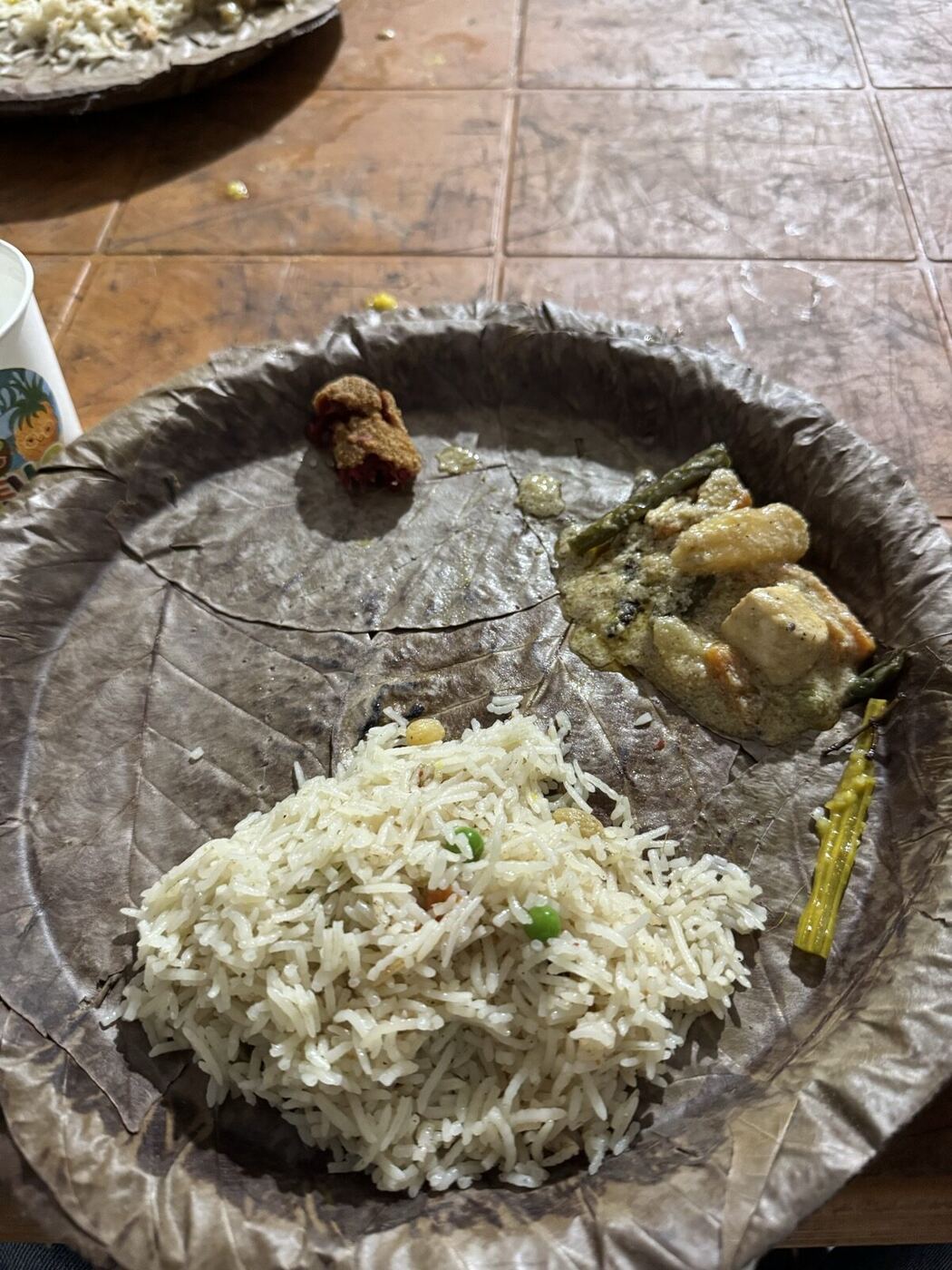
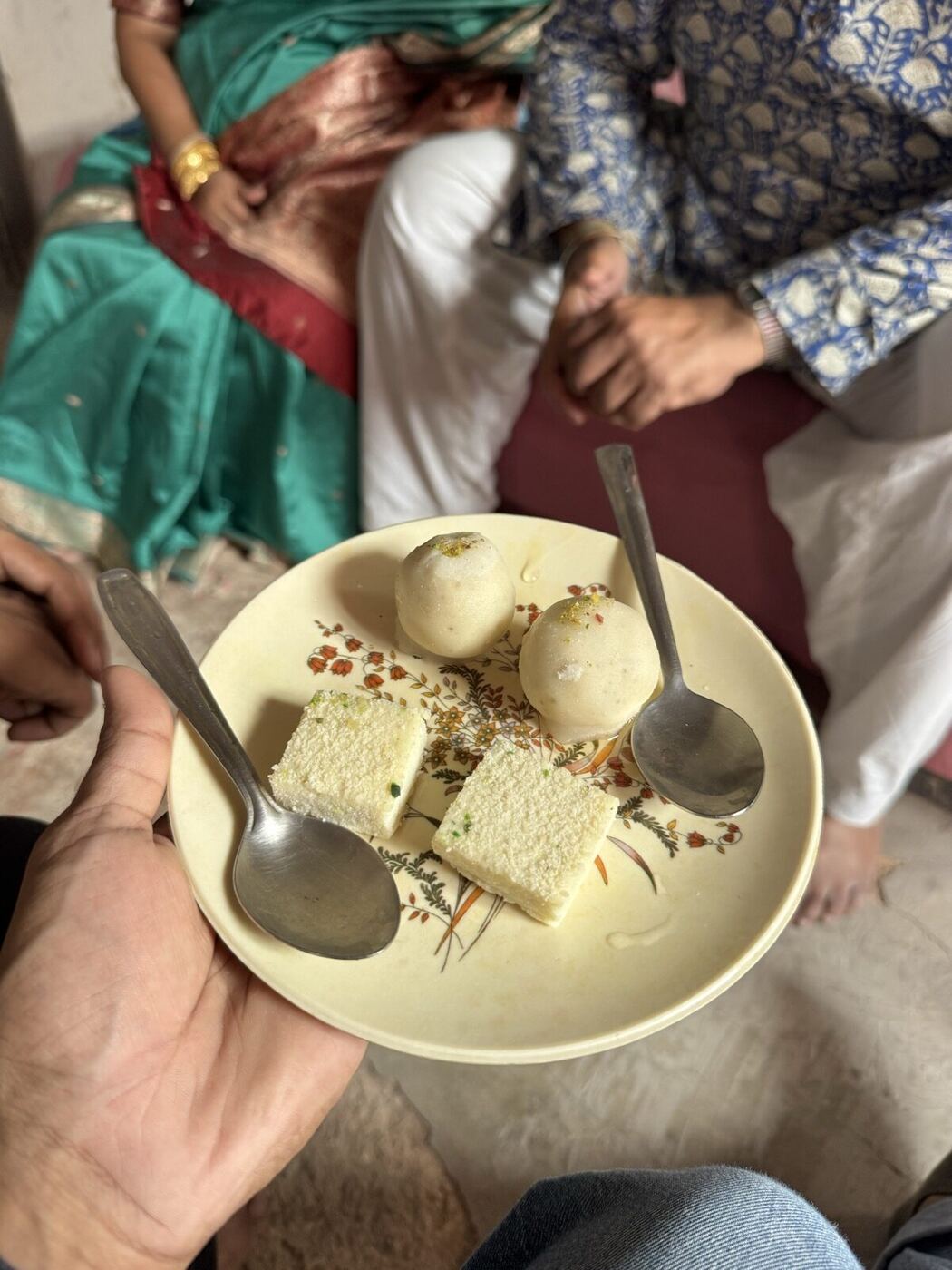
We got there at 11 AM and left at 4 PM. We hadn’t realised how far out it was. We were lucky to get an Uber there, but we couldn’t get one back. So we took the local train from Janai Road to Howrah.
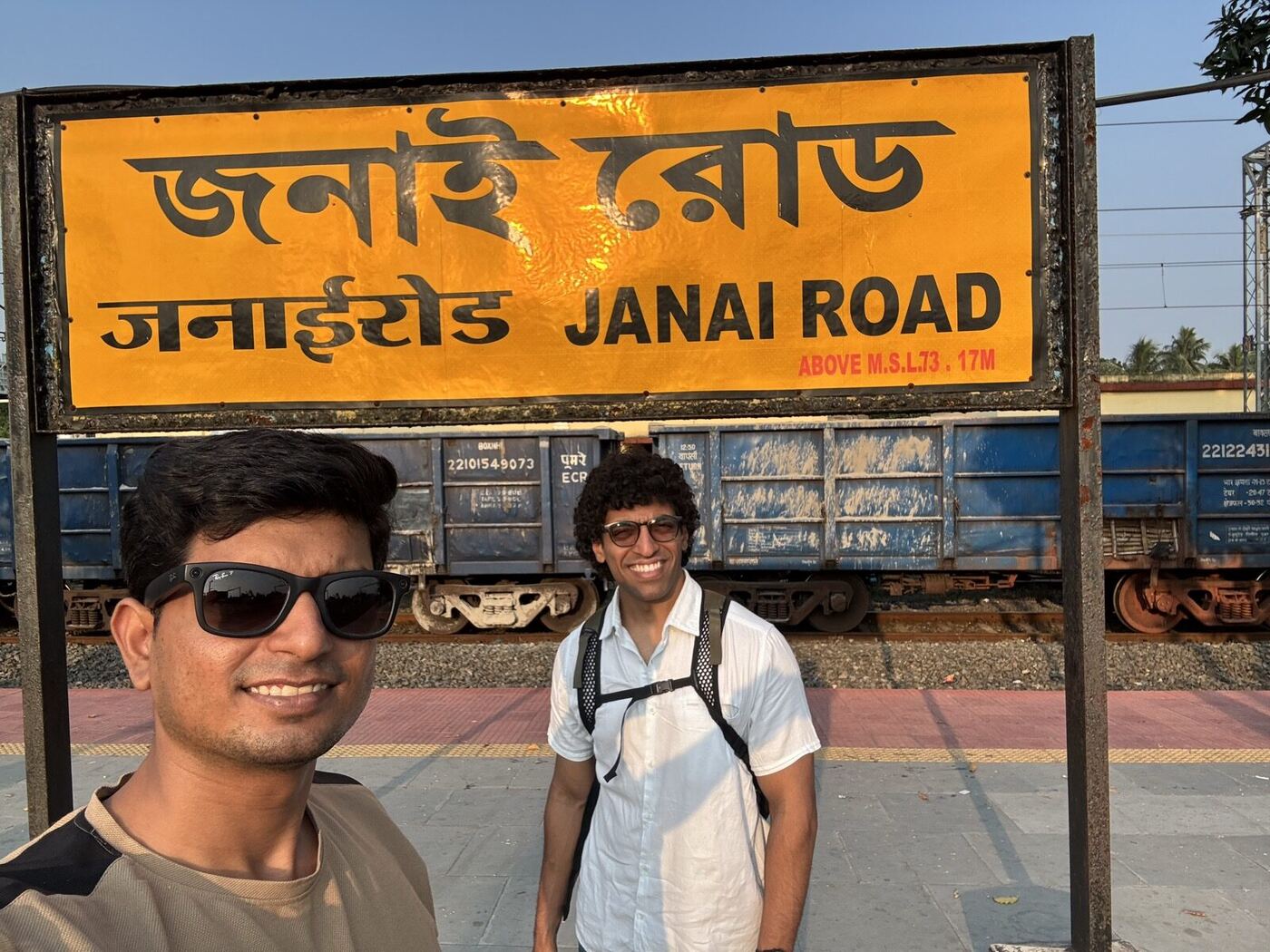
Howrah
Howrah station is big and beautiful. Howrah is actually a separate city from Kolkata, across the Hooghly river. It reminded me of Mumbai and Thane, except here the two cities are properly separated by water, and joined by the famous Howrah Bridge.
From Howrah, Anush wanted to buy a kurta for the next day’s Visarjan, so we made a stop at Bara Bazar. Kurta sorted, we headed to North Kolkata.
North Kolkata pandal hopping
See the North Kolkata route on Google Maps
Bagbazar was the highlight of the night. The pandal was a huge white temple, and inside, the idol was done in the traditional style, with silver ornamentation.
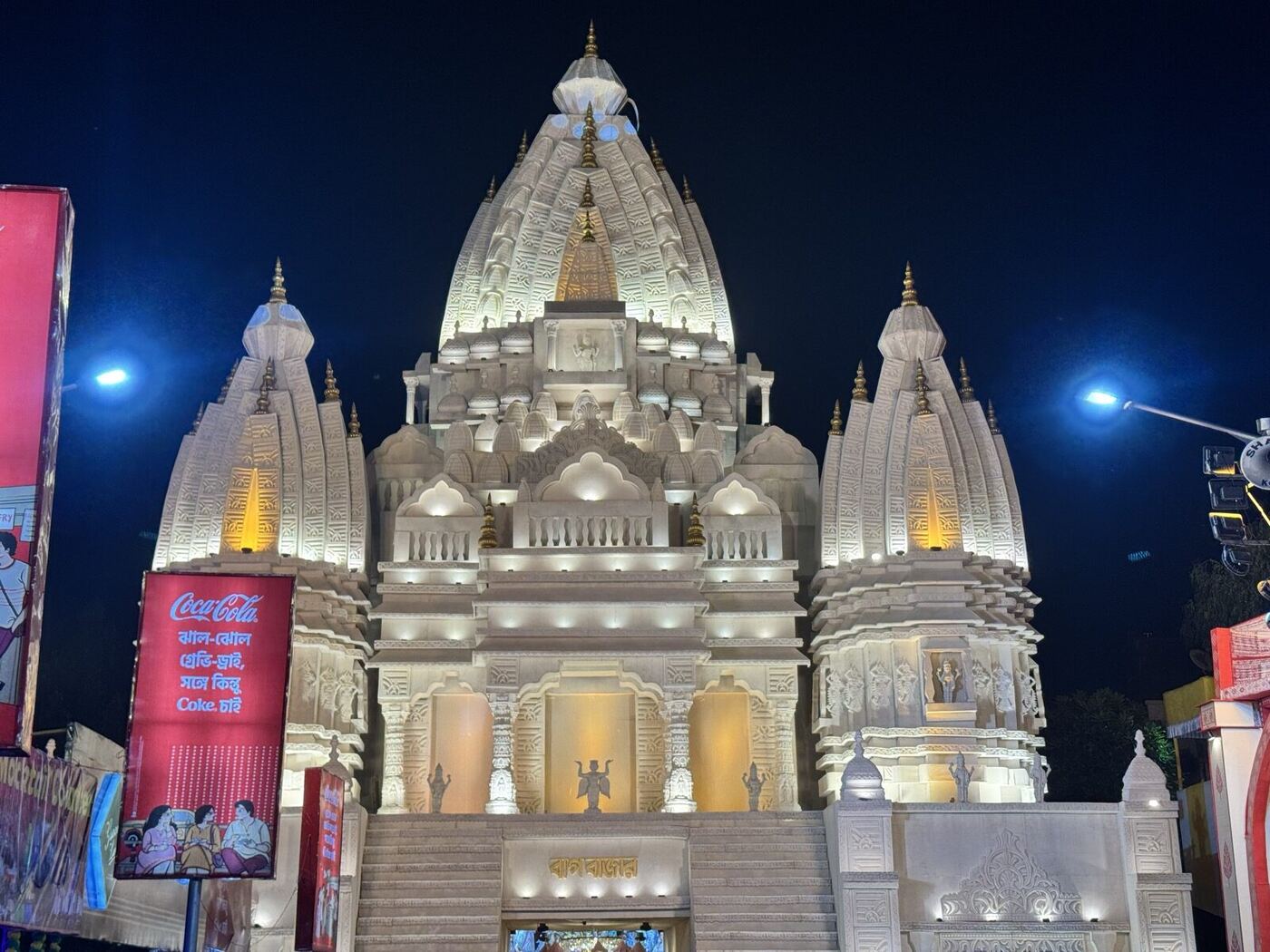
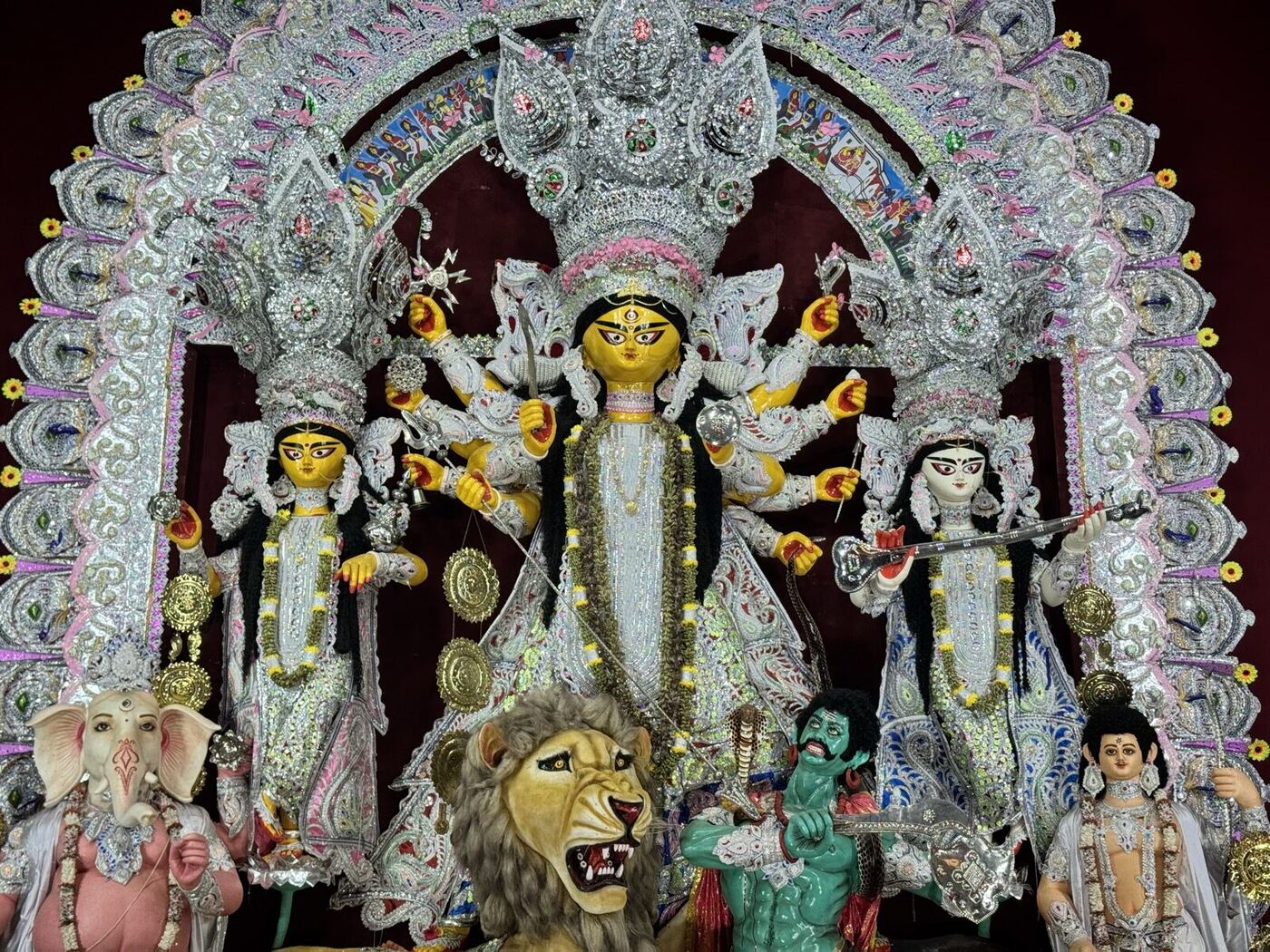
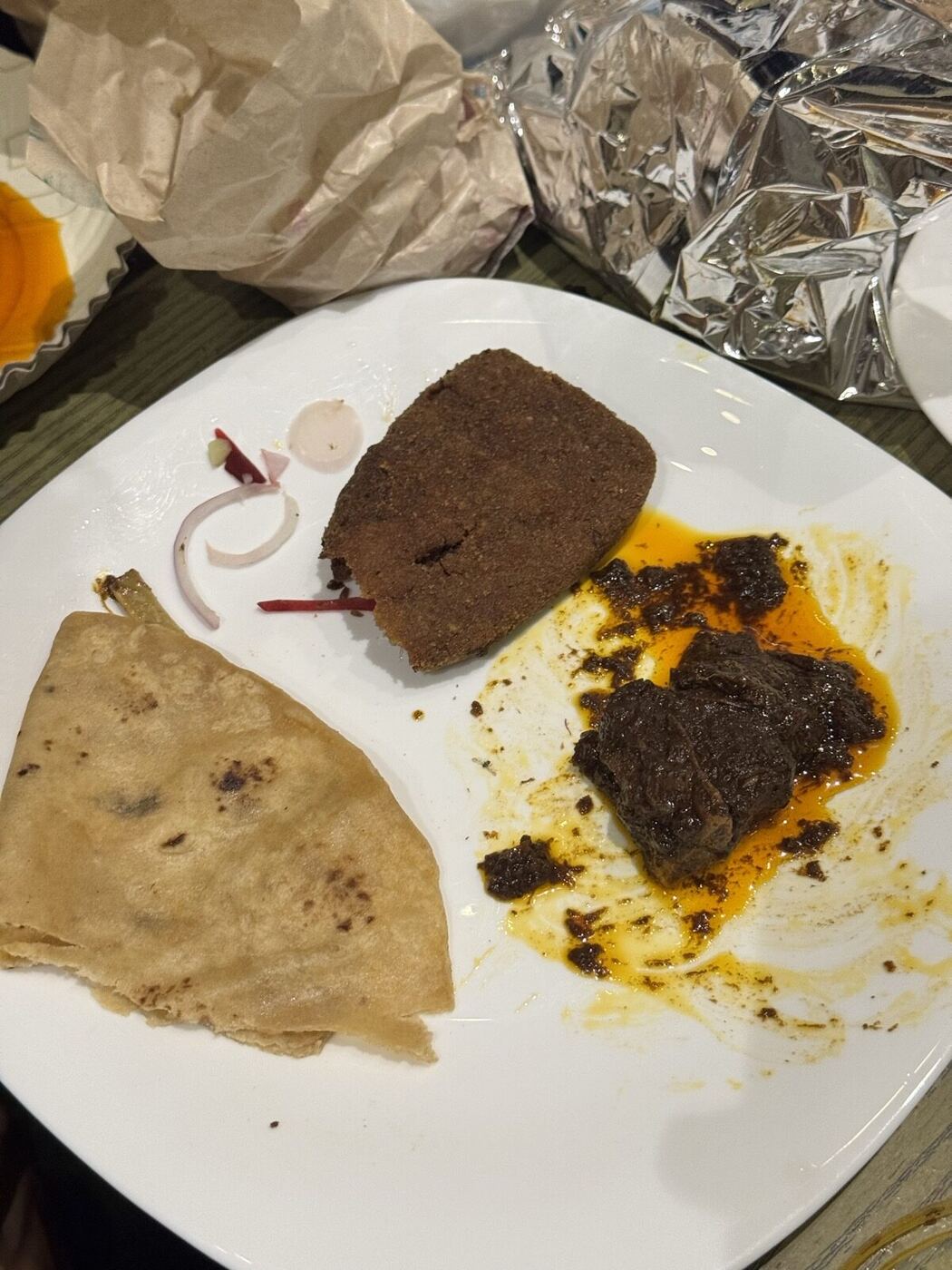
Along the way we stopped at places famous for their food. First was Mitra Cafe for fish kabiraji. It was packed, so we took a parcel. At the last stop we went to Golbari for their famous mutton kosha with paratha. Also packed, so another parcel.
Somewhere along the way, Anush had moong bhajiyas from a roadside stall. That turned out to be a mistake, and it wrecked his entire next day.
Back at the hostel, I had dinner out of the parcels. Anush went straight to sleep.
Day 4 (Dashami): Visarjan at Babughat
We didn’t have big plans for this day. We only wanted to see the Visarjan, which happens after sunset. Anush’s stomach was still upset, so he rested all day.
Peter Cat
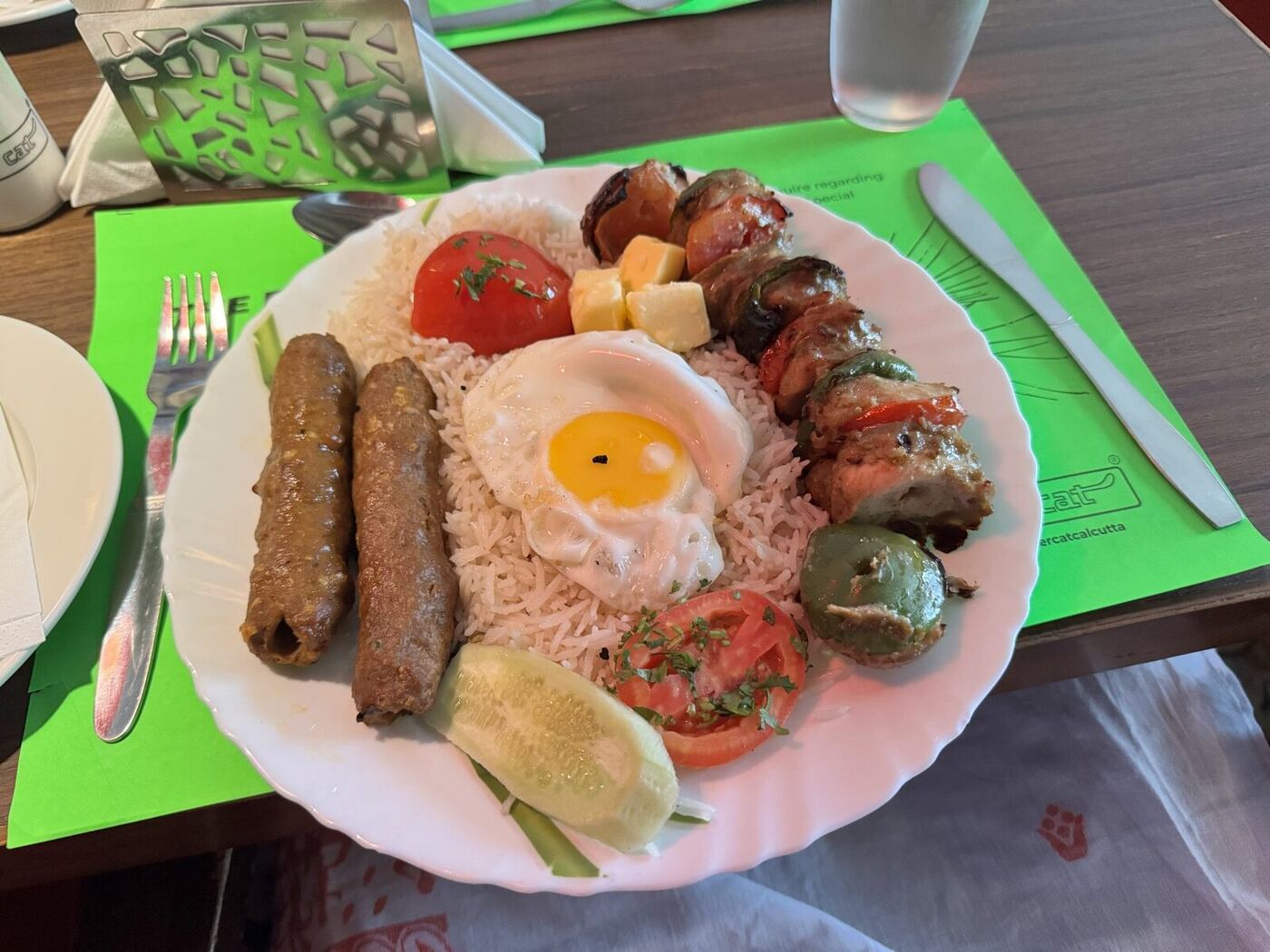
I started late, at 12 PM, and went straight to Peter Cat on Park Street for lunch. I had their famous chelo kebab. It was light and full of flavour. I’d recommend it.
After lunch I went back to the hostel for an afternoon nap. :)
Nizam’s and K.C. Das
At 6 PM I set off for the Visarjan. A quick search told me it happens at several ghats along the Hooghly, and the most famous one is Babughat, so that’s where I went. I planned my route past two places I wanted to try.
First, Nizam’s. The kathi roll is said to have been born here, so I had to give it a shot. It was good, worth trying.
Next, K.C. Das for sweets. I had a chocolate sandesh, a rasgulla and a kala jamun. To be honest, it was mid and overhyped. I wouldn’t recommend it.
Visarjan
From there I took a Rapido to Babughat.
Sadly, we weren’t allowed onto the ghats. Only the idols and the pandal members could go in. The rest of us watched from outside as the idols went in.
I’m from Mumbai. In our Ganpati Visarjan there’s one main idol, Ganpati. Here, every pandal had five: Durga, Saraswati, Lakshmi, Ganesh and Kartik. They came in on trucks, and were then either dragged to the ghat on wooden blocks or carried one by one on the backs of the men.
I couldn’t see the actual immersion in the river, but it was still something to witness first hand.
I’d eaten my way through the evening already, so on the way back I picked up some fruit. That was dinner. :) I was back at the hostel by around 10.
Day 5: Seeing the city
With the pujo done, we spent the next day seeing Kolkata itself.
We started with brunch at Peter Cat again. I had the chelo kebab a second time, because Anush wanted to try it too.
Indian Museum
Next was the Indian Museum, close to Park Street. We spent two to three hours there. The only part I really liked was the zoology section, with skeletons of all kinds of mammals. Overall, I found the museum mid. :(
Victoria Memorial
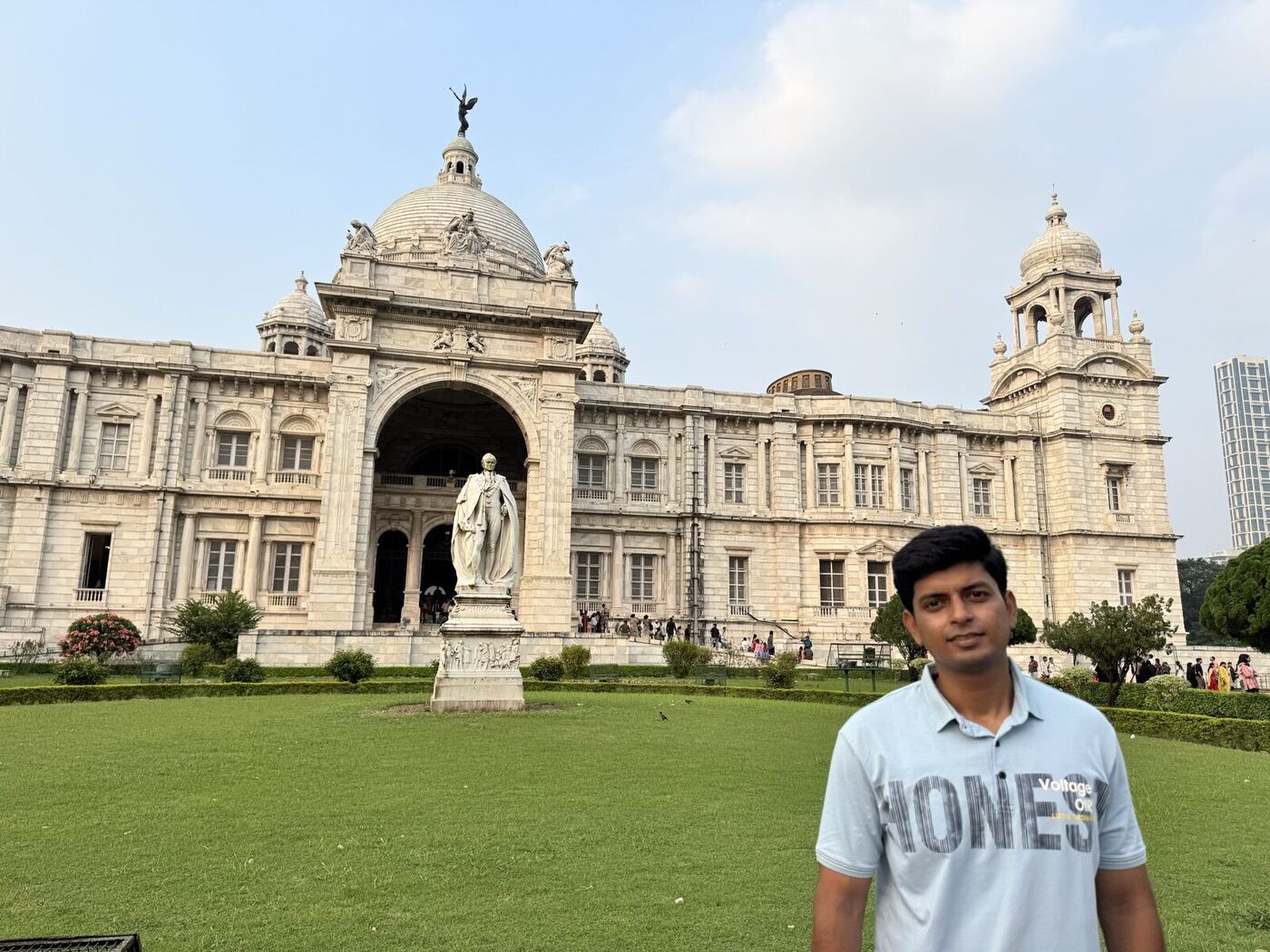
Then we went to the Victoria Memorial. It’s grand European architecture, a beautiful monument with large open spaces and gardens around it. It reminded me of the public spaces in Spain. I wish we had places like this in Mumbai. It’s a concrete jungle now, built around consumerism.
We spent about two hours there.

Birla Mandir
From there Anush went back to the hostel, and I took a Rapido to the Birla Mandir, a beautiful Radha Krishna temple. I spent some time there and just relaxed.
Oh! Calcutta
For dinner I went to Oh! Calcutta, the branch about 1.5 km from Birla Mandir, to try a couple of famous dishes.
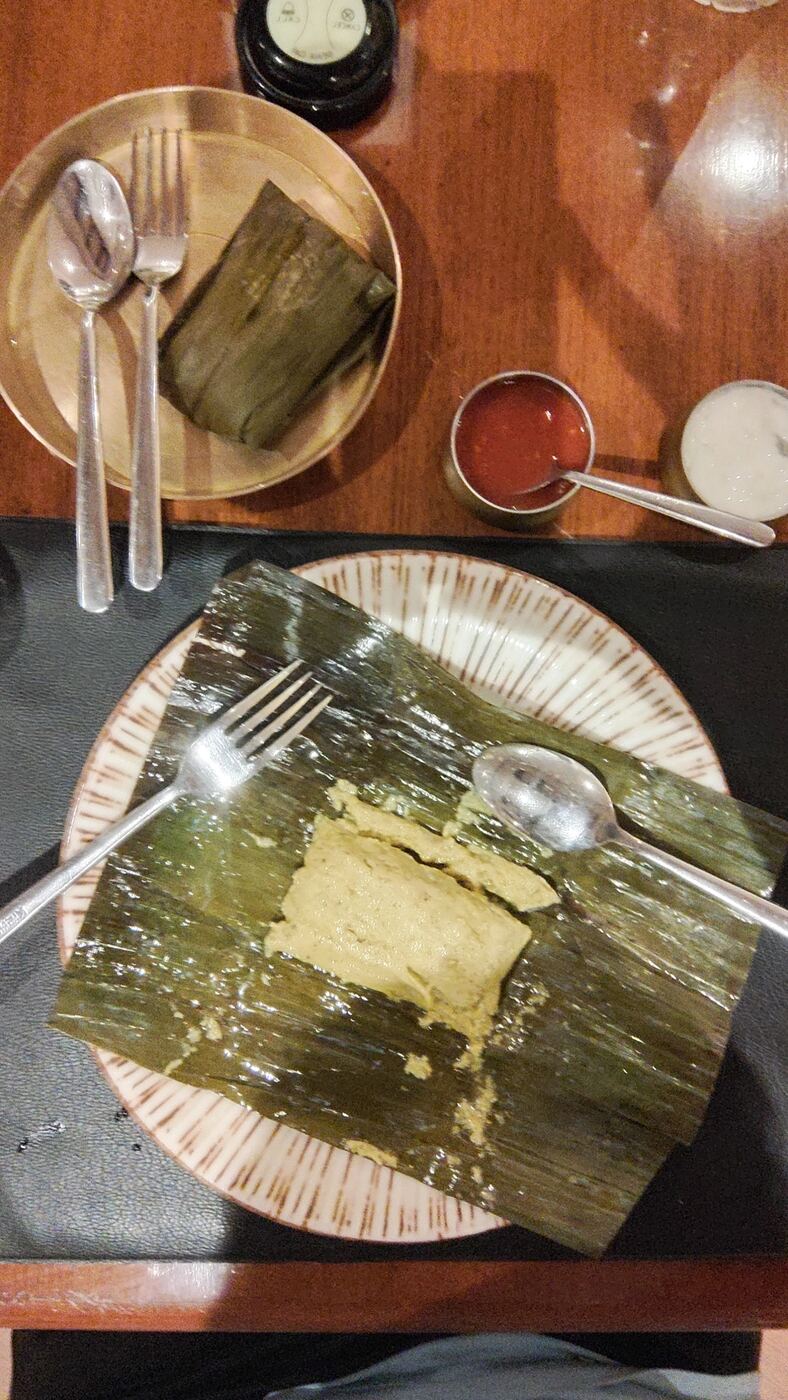
The first was bhetki paturi, bhetki fish marinated in mustard and steamed. It was delicious, and a flavour I’d never had before. It was even better with the coconut cream condiment they served alongside it.
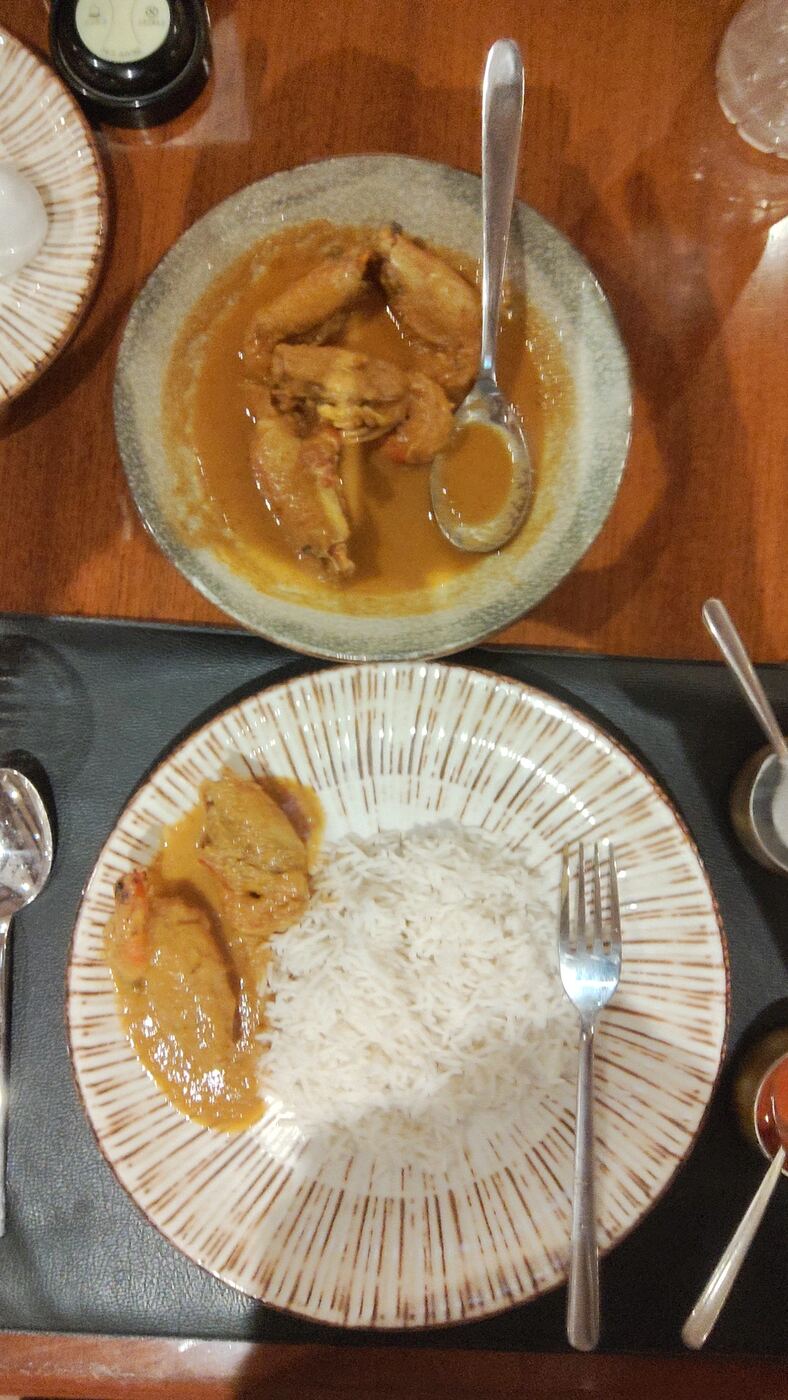
The second was chingri malai curry, prawns in a coconut milk gravy, with steamed rice. It was tasty, but the prawns came with the heads still on and the shells covering them. I’m not used to eating prawns like that. And it was expensive, about ₹1,700 just for me. Once is enough. :)
At the end they brought out a rajbhog and a mishti paan, both on the house. A nice touch after a bill like that.
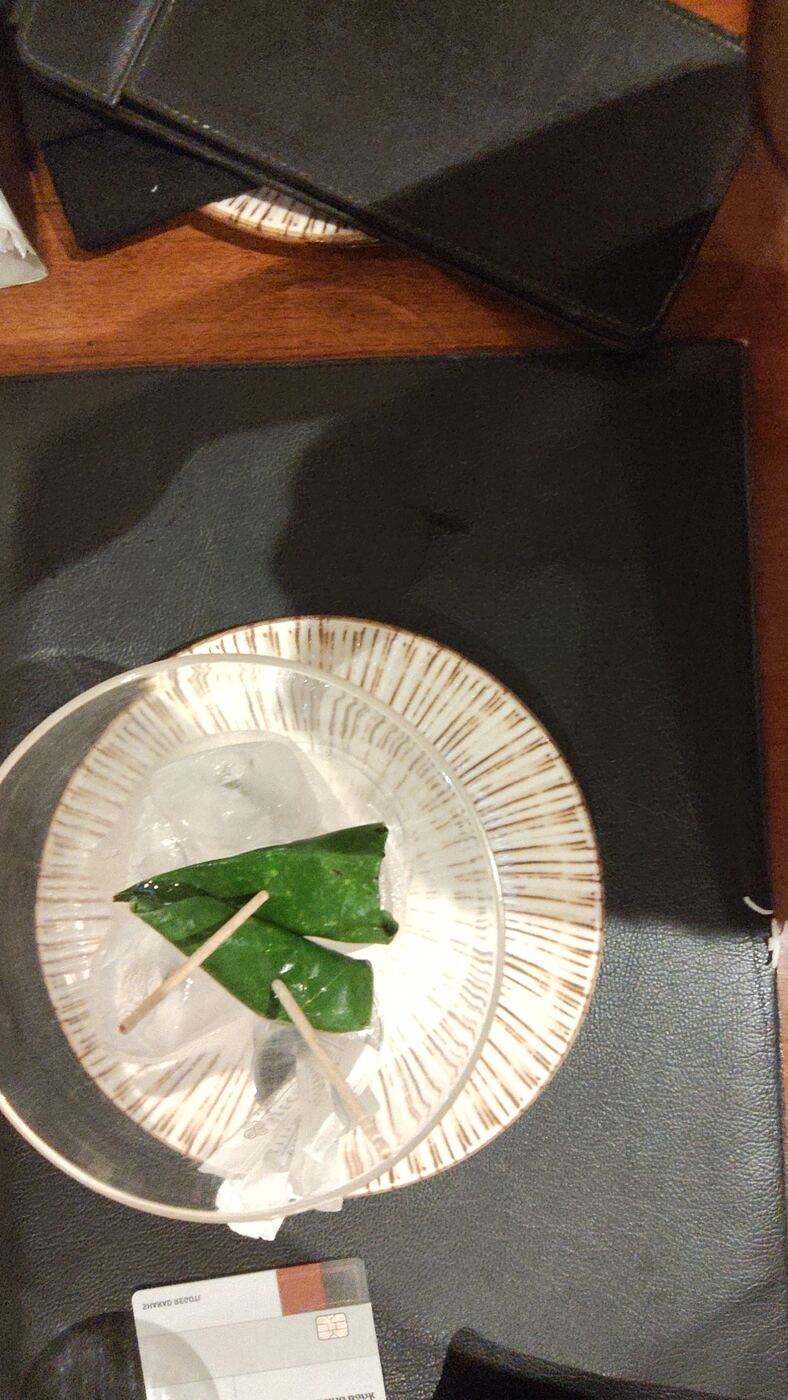
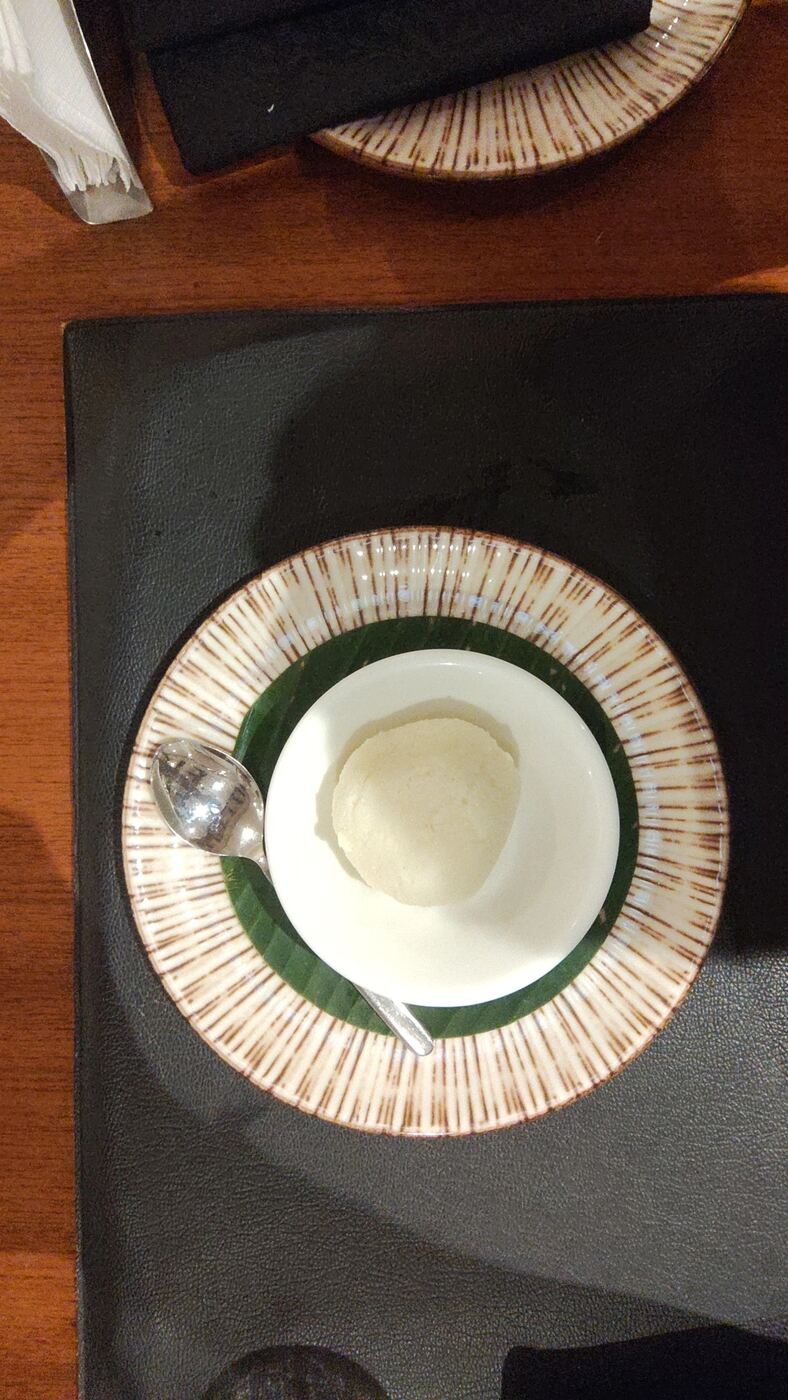
Then it was back to the hostel to rest.
Day 6: Sweets and the flight home
Our flight was at 5 PM, so the plan was simple: breakfast, and some famous Kolkata sweets to take home for family.
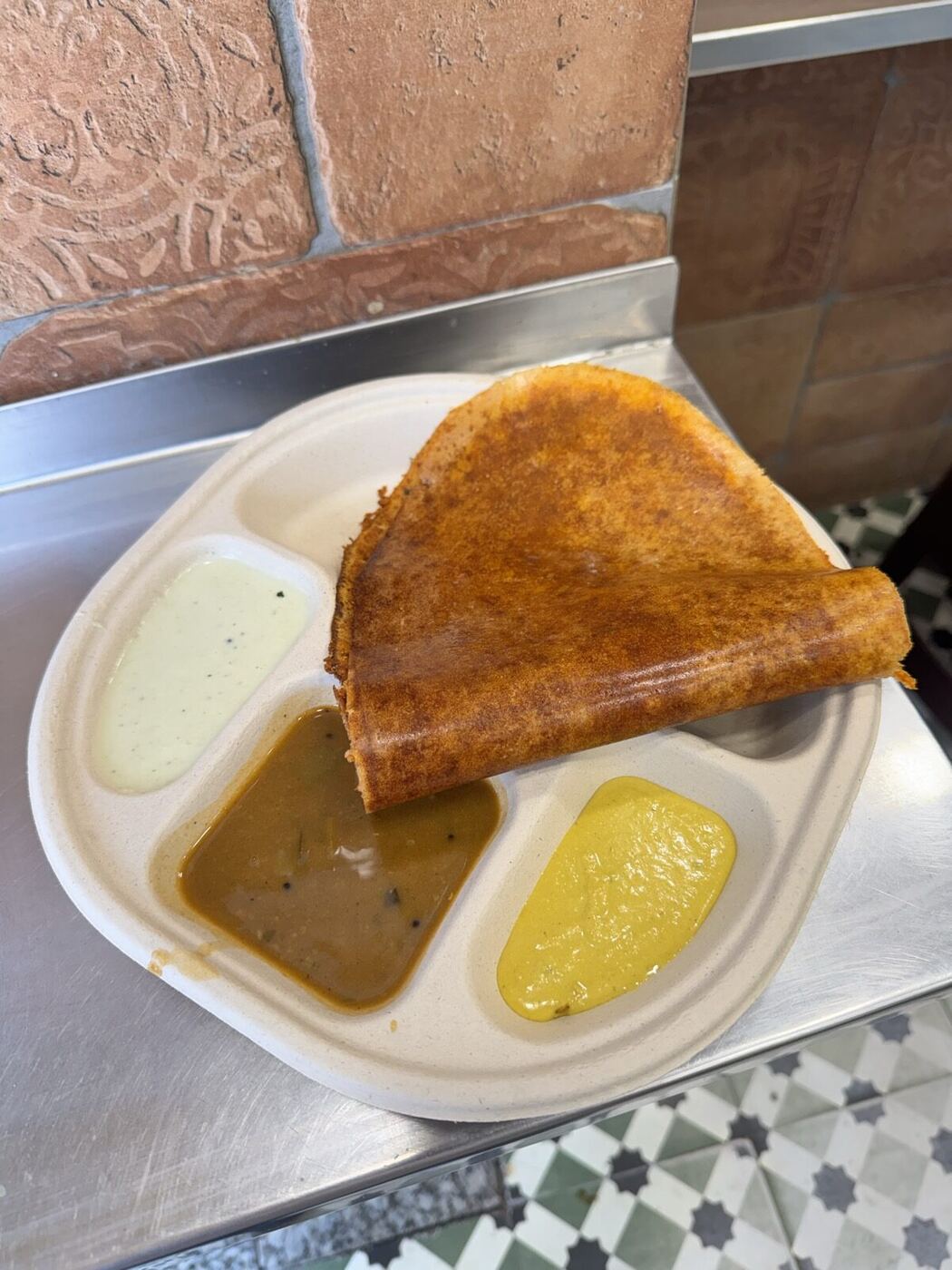
For breakfast we went to Murlis, near Park Street, and had dosa. It was good.
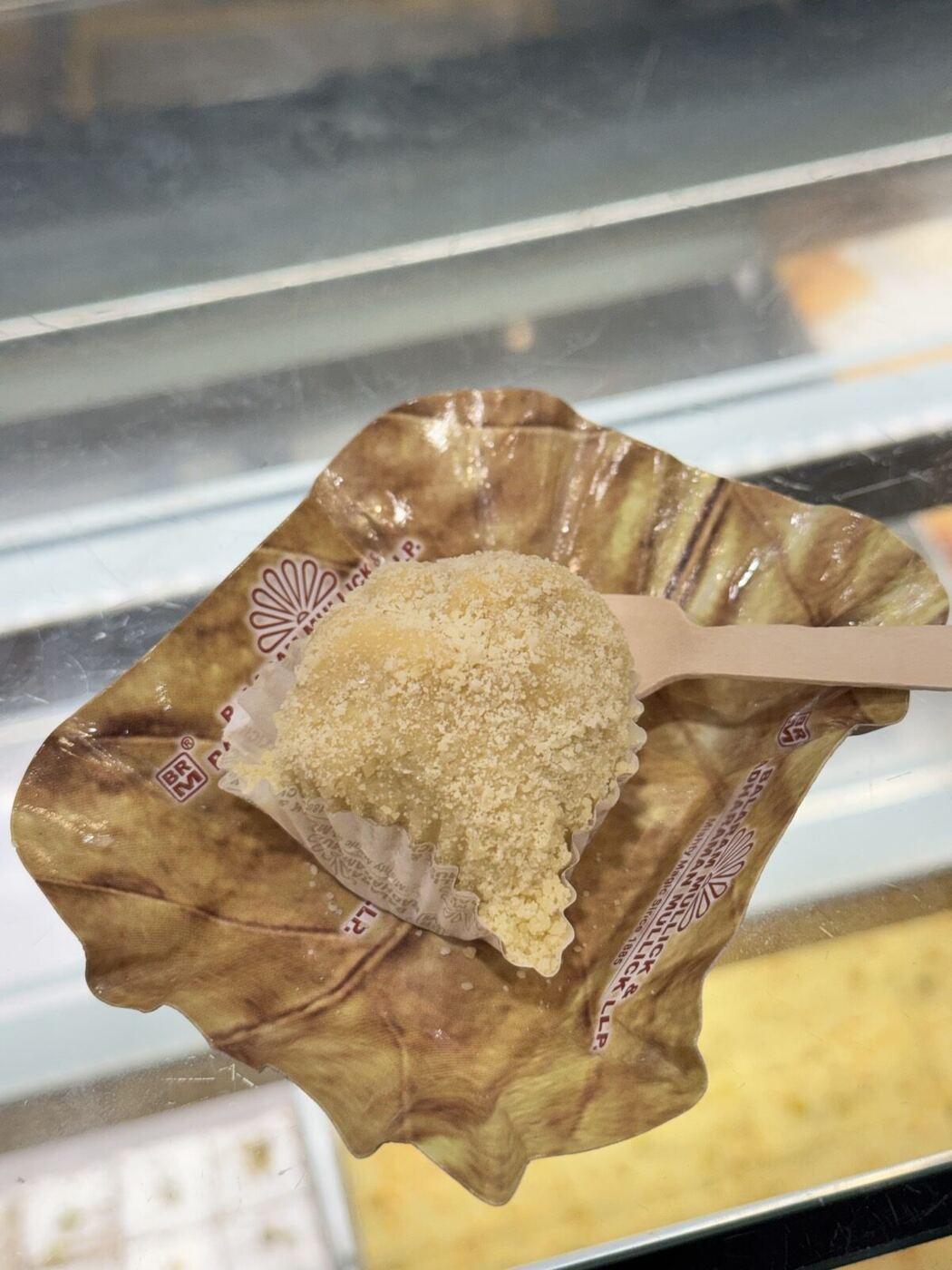
For sweets, we’d originally planned on K.C. Das. After my experience there, and after Anush’s friends and the people at our hostel all said the same thing, we went to Balaram Mullick & Radharaman Mullick near Park Street instead. They let us taste before we bought, and everything was delicious. I took rasgulla, kheer gulab jamun, sandesh and kheer kadam.
We went back to the hostel, packed our bags and took the metro to the airport. Our flight was delayed by 90 minutes, typical SpiceJet behaviour. :)
And then we were back in Mumbai.
Tips if you’re planning Kolkata during Durga Puja
- Stay around Park Street. It’s central, it’s lively, and the metro is close. Just book early so you don’t end up in a bad hostel like we did.
- Check the metro timings. During the puja the metro runs until about 5 AM but opens later than usual, so a midday arrival might mean taking a bus from the airport.
- Use the metro for distance, Rapido for hopping. I used the metro to get to the South, Central or North cluster, and then Rapido between pandals. If the next pandal was more than about a kilometre away, I took a Rapido.
- Book metro tickets on the app. I used Aamar Kolkata Metro.
- Do rajbaris by day and pandals by night. The baris are better in daylight, and the pandals come alive with the lighting after dark.
- Expect crowds at the famous eateries. Take a parcel if you can’t get a table.
- Skip K.C. Das, go to Balaram Mullick for sweets.
- Be careful with roadside food. Ask Anush. :)
My take on Kolkata
I think Kolkata during Durga Puja has a bigger vibe than Mumbai during Ganpati. In Mumbai, only certain parts of the city really light up. In Kolkata it felt like the whole state was out, with families pandal hopping until the early hours of the morning.
Overall I liked the city a lot. Food was cheap. Even fine dining was affordable, and street food was cheaper still. Non-veg food, eggs, chicken and mutton, is easy to find on the street, which you rarely see in Mumbai outside a few areas, where street food is mostly vegetarian.
The city looked planned. The roads were wide and well paved. Very old establishments are still around, running at their own pace.
Rents and real estate are cheaper, but salaries are lower too. To me it felt like a laid-back city, where people settle for less, but live a happy life with their families and are content with it. It didn’t feel like a city for someone chasing ambition.
I still find it fascinating that this was once the economic powerhouse of India, during the British Raj and for some time after independence. How did it decline? Politics? I don’t know. Maybe the new government will take another look at this old city.