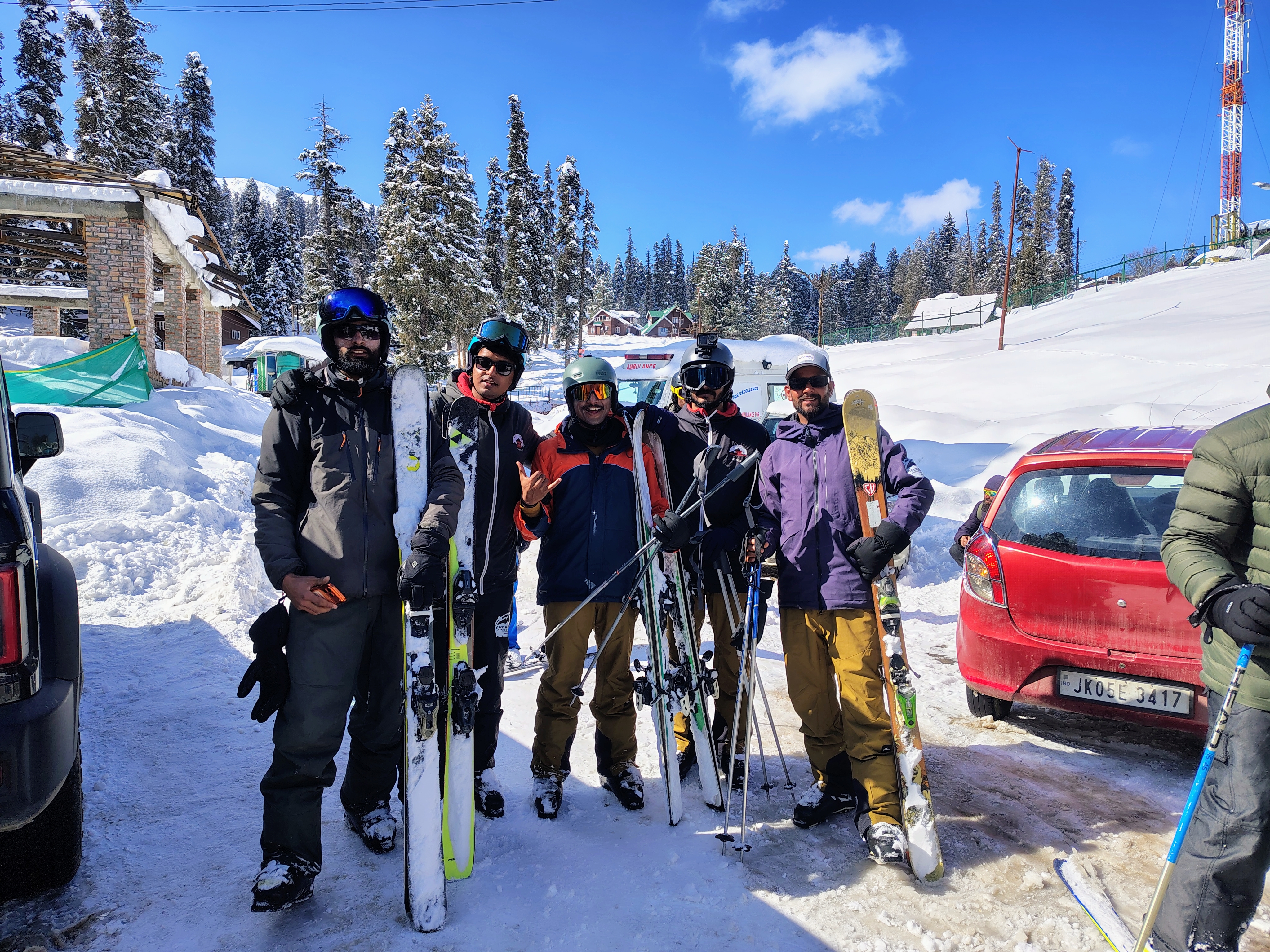
Gulmarg, often called the “Heartland of Winter Sports in India,” has always been on my bucket list. This year, I finally took the plunge and joined the Kashmir Ski School (also known as Gulmarg Ski Resort) for their 7-day Basic Ski Course. Founded by Rais Bakshi, this school is a staple for anyone looking to transition from a city dweller to a snow-glider.
I went for learning skiing, but they also offer snowboarding courses. Everything will be the same except the equipment and techniques. If you are interested in snowboarding, you can check out their website for more details.
If you are planning your first ski trip, here is a raw, detailed breakdown of my experience—from the “sketchy” booking process to the adrenaline of Phase 1.
The Logistics: Booking & Cost
The 7-day trip cost me approximately ₹45,000. While it might seem like a lot, it is actually a comprehensive “all-inclusive” package.
- Inclusions: Deluxe hotel stay, all meals (Breakfast & Dinner), expert instructors, ski equipment, lift passes, and Srinagar-to-Gulmarg transfers.
- Booking Process: The booking process was old-school: a phone call to check dates, pay via UPI (you can pay 100% or a 60% deposit — I paid 60% ≈ ₹27,000), then share screenshots on WhatsApp to confirm. You’ll get a WhatsApp “OK” confirmation — no PDF/email receipts typically, so take screenshots of everything and call the contact a day before arrival. To be honest, it felt a bit sketchy initially, but Rais was always available on call, and the coordination was seamless.
- Flight Cost: I flew from Mumbai to Srinagar for around ₹18,000 round trip (direct flights).
Tip: Give them your flight arrival time so they can schedule your pickup from Srinagar. The drive from Srinagar to Gulmarg is roughly 2 hours on a good day.
Where you stay & the hotel situation
The ski school works with multiple hotels and assigns you based on availability; I stayed at the Global Hotel. Rooms were heated and comfortable with bathrooms, you will get hot water, don’t turn off the heater, it’s automatic. One can complain that the rooms are small, but I didn’t care as most of the day you will be on the slopes.
You’ll typically share a room with another guest (and instructors are shared at a ratio of around 1:2), though occasionally you might get a room to yourself if bookings are sparse.
FYI: The toilets seats will be cold, so be prepared for that.
What to pack — my checklist (copy & paste)
- Clothing: Thermal inner layers (Decathlon is your best friend), a warm jacket, balaclava, and long socks,
- Skin Care: Moisturizer, Sunscreen, and Lip Balm.
- Sunglasses: The glare from the snow can be intense, so bring a good pair of sunglasses.
- Electronics: Power bank, Action Camera (Optional)
- Hydration (Optional): A hydration pack. You cannot carry water bottles on the slopes or on you. After the hotel, you can only have a bottle at the top of the baby slope, which you cannot carry, and it will be cold to drink.
- Carry Cash: Due to the SIM card issue, many local vendors and even some ski school services may not accept cards or UPI. Always have enough cash on hand for meals, snacks, and any additional expenses. ATMs are available in Gulmarg.
Pro Tip: If you’re flying from outside the state, remember that prepaid SIM cards do not work in Kashmir. I bought a local Jio SIM at the Srinagar airport for ₹600 (unlimited data for 30 days). You’ll need your Aadhaar card for this.
The 7-Day Itinerary: From Zero to (Almost) Hero
Day 1: Arrival & Gear Fitting
Day 1 is mostly arrival, hotel check-in, and gear-fitting. You’ll be given: ski boots, skis, poles, a helmet, goggles, a jacket, pants, and gloves. These items stay with you for the week, so get comfortable walking in ski boots—they feel awkward at first. Expect ~20 minutes of theory on gear, stance, and safety, then free time to explore Gulmarg village before bed.
Also, after getting all the equipment, you will need to pay the remaining balance (₹18,000). I paid via credit card. They will give you a receipt for this payment.
Note: You will get contact details of your driver who is going to pick you up from Srinagar one day before, you can only contact him after buying a new sim or using other local’s phone at the airport. He will be waiting for you at the airport with a placard (gulmargskiresort).
Here is my Day 1 vlog, team introduction.
Day 2: The Baby Slope (Balance & “Pizza”)
Training runs 10:00–16:00 every day; be ready (gear on) by 9:45. Breakfast will be ready by 8:40 AM. Get your breakfast and be ready by 9:45. I recommend a heavy breakfast to fuel your day on the slopes. It takes a lot of energy to learn skiing, and you don’t want to be running on empty by mid-morning.
At 9:45, there will be a transport available at the hotel to take you to the slopes. It’s a short 5-min drive; it will carry you, your teammates, and all your ski equipment.
Day 2 is your first practical experience: walking on snow, balancing, learning how to stop (snow-plough), controlling speed and stance (pressure on shins, knees slightly bent). On the baby slope, you often carry skis up short distances and practice walking/climbing back — a porter will help with your skis on the very first climbs. Once you get confident, you’ll start using drag lifts for repeated runs.
Gulmarg has various slopes.
- Baby Slope, here you will spend most of your time learning the basics.
- Highland Park, a bit steeper, where you’ll practice turns and speed control.
- Slope 85, the steepest
Regarding lunch, at the top of the baby slope, there is a small stall that serves Maggi, Rajma Chaval, Aloo Paratha, tea, coffee, and other snacks. It’s a good spot for a quick break and to refuel before heading back down. Every day you will be heading here. Just a reminder to carry cash, as they might not accept cards, and UPI may not work due to sim issues.
Video: Day 2 vlog, training ends Video: How to use drag lifts
Day 3: Mastering the Turns
Today is about Snow Plough Turns. You’ll practice shifting your weight to turn left and right.
Note: Regarding drag lifts, it closes during lunch time from 1:00 PM to 2:00 PM and on friday it’s close from 12:30 to 2:30 because of Namaaz, so plan your runs accordingly. The chair lift is a bit intimidating at first, but the instructors will guide you through it.
The thing that I hated about drag lifts is that you have to wait in a long queue; it takes around 20 minutes to get on the chair lift.
Here is my Day 3 vlog.
Day 4: Step Turns & Parallel Turns
Today, you will learn different types of turns:
Step turns: A controlled way to initiate a turn while walking the skis across the slope — step your downhill foot forward into the turn, plant it, then bring the other ski around. It’s a basic rhythm-building drill.
Parallel turns: Both skis remain parallel through the turn (no wedge). This is a cleaner, faster technique that looks and feels more “advanced.” You’ll first practice turning mechanics on gentle slopes.
Here is my Day 4 vlog.
Day 5: Practice Turns & The Highland Slopes
If you’ve shown progress, the instructor moves you to the Highland. These slopes are steeper. My Strategy: Don’t go straight down! Go across the slope from end to end to control your speed. If you go straight, you’ll pick up max speed, and for a beginner, that usually ends in a spectacular fall.
Here is my Day 5 vlog.
Day 6: Highland all day (practice steeper terrain)
Continue practicing on the Highland slopes, which are steeper and more challenging. You’ll work on controlling your speed and making clean turns on more difficult terrain.
Here is my Day 6 vlog.
Day 7: Phase 1 – The Big League
If you’re ready (many beginners need more time), you’ll ride the gondola to Kongdoori / Phase 1 to ski longer groomers and open runs. The gondola has two phases — Phase 1 is the Kongdoori mid-station; Phase 2 goes higher up toward Apharwat/Apharwat Peak.
The Gondola (tickets are ~₹1,200). Skiing down from the mountains is a whole different beast. The views are brilliant, but the stakes are higher.
Here is my Day 7 vlog.
Final Thoughts
Instructors, vibe & evenings
From instructors to hotel staff, everyone I met was kind and patient. The instructor team I trained with (special thanks to Ishfaq, Imran, Umar, Naseer, Shahid, Raees, and the others) was humble, well-trained, and helpful.
Nights were for the common room near the fireplace: chats, practice notes, and bonding with other solo travelers. I went solo from Mumbai and made friends from across India — the ski environment at Gulmarg is surprisingly social and welcoming for introverts.
Practical tips & cautions
Book later flights on your final day — the transfer to Srinagar can take ~2 hours (give buffer), and weather delays happen. If you must fly the same day after Phase 1, schedule an evening flight (ideally 9 PM) or plan an overnight near Srinagar.
Snowfall variability: seasons vary; recent winters have seen fluctuations in snowfall affecting events and operations — always check weather and local advisories before planning.
Carry Cash: Due to the SIM card issue, many local vendors and even some ski school services may not accept cards or UPI. Always have enough cash on hand for meals, snacks, and any additional expenses.
Would I recommend it?
Yes. For an absolute beginner, a structured 7-day course in Gulmarg is the right way to go: baby slopes, step progressions, Highland exposure, and then Phase 1 if you’re ready. The views from Phase 1 are brilliant, the instructors are patient, and the social/common-room vibe makes it memorable. I’ve already decided to return next year for an intermediate course to master Phase 1.
Skiing is difficult. You will fall. You will be sore. But the team at Kashmir Ski School—instructors like Ishfaq, Imran, and Shahid—are incredibly patient and humble. They ensure you learn at your own pace while staying safe.
Whether you go solo or with friends, you’ll leave Gulmarg with more than just a new skill; you’ll leave with a family of fellow adventurers.
Raw footage, resources & references
I recorded clips across all days — baby slope runs, chair/gondola rides, and Phase 1 views. See my Instagram vlogs: @explorewithsharad (clips & highlights).