Disclaimer: These are personal observations from someone who grew up in India and was leaving the country for the first time. Take it all with a pinch of salt.
Note: I wrote these notes at different times, some during the trip and some almost a year later. So a few parts are fuzzy, especially how I got from one town to the next.
Japan was my first international trip. I was there from 13th December 2025 to 7th January 2026. I’ve already written about Spain, which came after, so this one is overdue.
This post is part itinerary, part cost breakdown, and part me trying to make sense of a country that is very different from India.
Before you go
Visa
Since it was my first time, I didn’t want to risk doing the visa myself. I went through a visa agency in Mumbai called Stampyvisa. The visa came in about a week and cost me around ₹4,500 including their fee. I got a multiple-entry tourist visa valid for 90 days.
Flights
My round-trip direct flights cost ₹55,000. I paid an extra ₹5,000 for a full-refund option in case the visa got rejected. For a first trip, that peace of mind was worth it.
I flew ANA (All Nippon Airways). I’d happily fly them again. Good legroom and the food was actually good.
What to pack
December in Japan is cold. You will live in your jacket and gloves, so bring decent ones. Apart from that:
- A universal adapter
- Some yen in cash. Japan is still quite cash-heavy. I got mine from BookMyForex.
- A forex credit card. I used the Scapia card.
Landing in Tokyo
I landed at Narita at 7:30 AM and was through immigration by 8:30.
At the airport I bought a physical SIM. You can get an eSIM too, but my Android phone doesn’t support it. The SIM cost me about ₹4,100, and I paid with the forex card. The airport is also a good place to exchange some cash. Get at least ¥10,000.
Then I went to the train station, bought a Suica card, loaded ¥5,000 on it and took the train into the city. It took about an hour to reach my hostel in Asakusabashi. Every major station has a tourist information center, and the people there are very helpful if you get lost.
Where I stayed
For the whole trip I stayed in hostels, and in private rooms when they were affordable. Stays cost me roughly ₹2,500 to ₹4,000 a night. Tokyo and Osaka were at the expensive end.
Check-in is 3 PM. Strictly.
I reached the hostel around 10 AM and asked about early check-in. No. Check-in is 3 PM, and they mean it. This was the same at every hostel on the trip. Japanese people follow rules very strictly.
So if you’re on a long flight and want to sleep off the jet lag when you arrive, I’d try to land in the afternoon or evening. If you do arrive early like I did, you can either wait in the lounge or drop your bags and go sightseeing. We did the second one almost everywhere.
Tokyo
Day 1: Asakusa
I’d booked a few cultural shows in Asakusa through the Klook app.
- Asakusa Kaguwa, a Japanese-style dance cabaret show, around ¥7,700. I enjoyed it.
- Samurai and Ninja Experience at the Samurai & Ninja Museum, around ¥4,125.
- Asakusa Sumo Club. The best thing I did that day, and one I’d recommend to anyone. Unlimited food, a great show, and I got to fight a real sumo wrestler. (I lost. Obviously.)
Day 2: teamLab, Odaiba, and JDM cars
- teamLab Planets. Book tickets in advance. Each room is a completely different environment, and it was one of the highlights of the day.
- Miraikan, the National Museum of Emerging Science and Innovation. I spent some time here.
- DiverCity Tokyo Plaza in Odaiba, to see the mall and the giant Gundam statue. I also had the best chicken wings of my life here.
- A JDM car night. This was the best part of the day. We went to the Daikoku Parking Area to look at Japanese modified cars, then I sat in a Mitsubishi Spyder and got driven around Tokyo. We ended with a photo near Tokyo Tower. It cost ¥21,000, and I made some friends along the way.
Day 3: city views and Shinjuku at night
- Roppongi Hills observation deck for the Tokyo City View, ¥1,200.
- Tokyo Tower, ¥1,500. I got the first stamp of my collection here (more on stamps below). Made more friends here too.
- Zojo-ji Temple, right next to the tower. Another stamp for the book.
- Shinjuku. Go at night. I didn’t have a plan, I just walked around, and it was great.
Day 4: temples, museums, and Akihabara
- Senso-ji Temple in Asakusa.
- Tokyo National Museum in Ueno.
- teamLab Borderless. I went to both teamLab museums. Do both if you can. They are genuinely different from each other.
- Akihabara, the anime district. I wandered around and then lost track of time looking at gadgets in Bic Camera.
Day 5: shrine hopping and Shibuya
By now a friend had joined me, and we were basically shrine hopping.
- Meiji Shrine. I got my first goshuin here.
- Yoyogi Park, right next to the shrine.
- Shibuya Sky for the view, and then the Shibuya Crossing.
Mount Fuji (Kawaguchiko), 19th December
We took a morning bus from the Shinjuku bus terminal to Kawaguchiko station.
We left our luggage at the luggage storage at the bus station. First stop was the famous Lawson with Fuji behind it, for the photo everyone takes. Then we took a short train ride to Shimoyoshida station and walked up to the Chureito Pagoda at Arakurayama Sengen Park. You can see the mountain from almost anywhere in Kawaguchiko, but the view from the pagoda is special.
After that we went back to Kawaguchiko station and took a bus to another well-known spot. There we rented bicycles and rode around the lake and through the village, stopping wherever we found a good Fuji view. We were back by 5 PM, returned the bikes, had dinner at a 7-Eleven, and left for Hakone.
One important thing: Mount Fuji is not visible every day. Clouds hide it a lot. Check a Fuji visibility forecast before you plan your day there.
Hakone, 20th December
From Kawaguchiko we took a bus to Gotemba station, and from there a train to Odawara, which is the gateway to Hakone. We got in at night and stayed in Odawara.
The next morning we bought the 2-day Hakone Free Pass at Odawara (¥6,000). It covers almost all the transport inside Hakone, so we didn’t think about tickets for the rest of the day. The loop we did:
- Hakone Tozan Railway from Odawara up to Gora.
- Cable car and then the Hakone Ropeway to Owakudani, the volcanic valley. The ropeway ride was amazing, you float right over the steaming valley. We spent some time there and tried the famous black eggs, boiled in the hot springs. They were OK. Just eggs, honestly.
- The ropeway again, down to Togendai on Lake Ashi.
- The pirate ship cruise across the lake to Moto-Hakone.
- A walk from the pier to Hakone Shrine and its torii gate in the water.
- The bus back to Odawara.
Nagano and Matsumoto, 21st December
This was a long travel day. We took the Shinkansen from Odawara to Tokyo, and then another one from Tokyo to Nagano, about three hours in total. We dropped our bags at the hostel in Nagano.
Then two places: Zenko-ji Temple in Nagano, and Matsumoto Castle, the black castle. Matsumoto is about an hour away by JR train, so it’s an easy half-day trip from Nagano. We went back to Nagano for the night.
The snow monkeys (Yudanaka), 22nd December
This is a day trip from Nagano. We took a train to Yudanaka and then a bus to the Snow Monkey Park (Jigokudani). From there it’s a 30 to 40 minute hike up to the monkeys.
And then you see it: monkeys sitting in natural hot springs with snow all around them. Snowy mountains and monkeys taking an onsen. I’ve never seen anything like it.
The hike is mostly flat. Wear layers, and bring a good pair of gloves.
Takayama, 23rd December
We reached Takayama in the morning and dropped our bags at the guest house. We took the sightseeing bus to the Hida Folk Village, which is basically an open-air museum of old Japanese houses. You can go into the houses and explore them properly. After that we walked around the town.
Book your Shirakawa-go bus while you’re here. The Nohi Bus between Takayama, Shirakawa-go and Kanazawa fills up, and we bought our tickets at the Takayama bus center.
My honest opinion: you can skip Takayama. The next stop shows the same kind of houses, and does it much better. But if you have the time, go.
Shirakawa-go, 24th December
We took an early morning Nohi Bus from Takayama to Shirakawa-go. It’s about an hour. We left our luggage in the lockers at the bus terminal.
My main tip: climb to the viewpoint above the village. It’s a 10 to 15 minute trek, and the view of the village against the snowy Japanese Alps is amazing. Then walk down and explore the village itself. Three to four hours is enough.
Walking around the village is free. Going inside any of the houses costs money.
In the afternoon we took another Nohi Bus on to Kanazawa.
Kanazawa, 24th and 25th December
We reached Kanazawa in the late afternoon and checked into the Pacific Hotel Kanazawa. That evening we saw Kanazawa Castle and walked through Higashi Chaya, the old tea house district. The next morning we went to Kenroku-en Garden.
My recommendation: gardens in winter are not much to look at. If you’re going in winter, you can skip them. Come back in spring for the gardens.
Kyoto and Nara, 25th to 28th December
From Kanazawa we took the train to Kyoto. It’s the Hokuriku Shinkansen to Tsuruga, and then the Thunderbird limited express to Kyoto. We stayed at K’s House Kyoto.
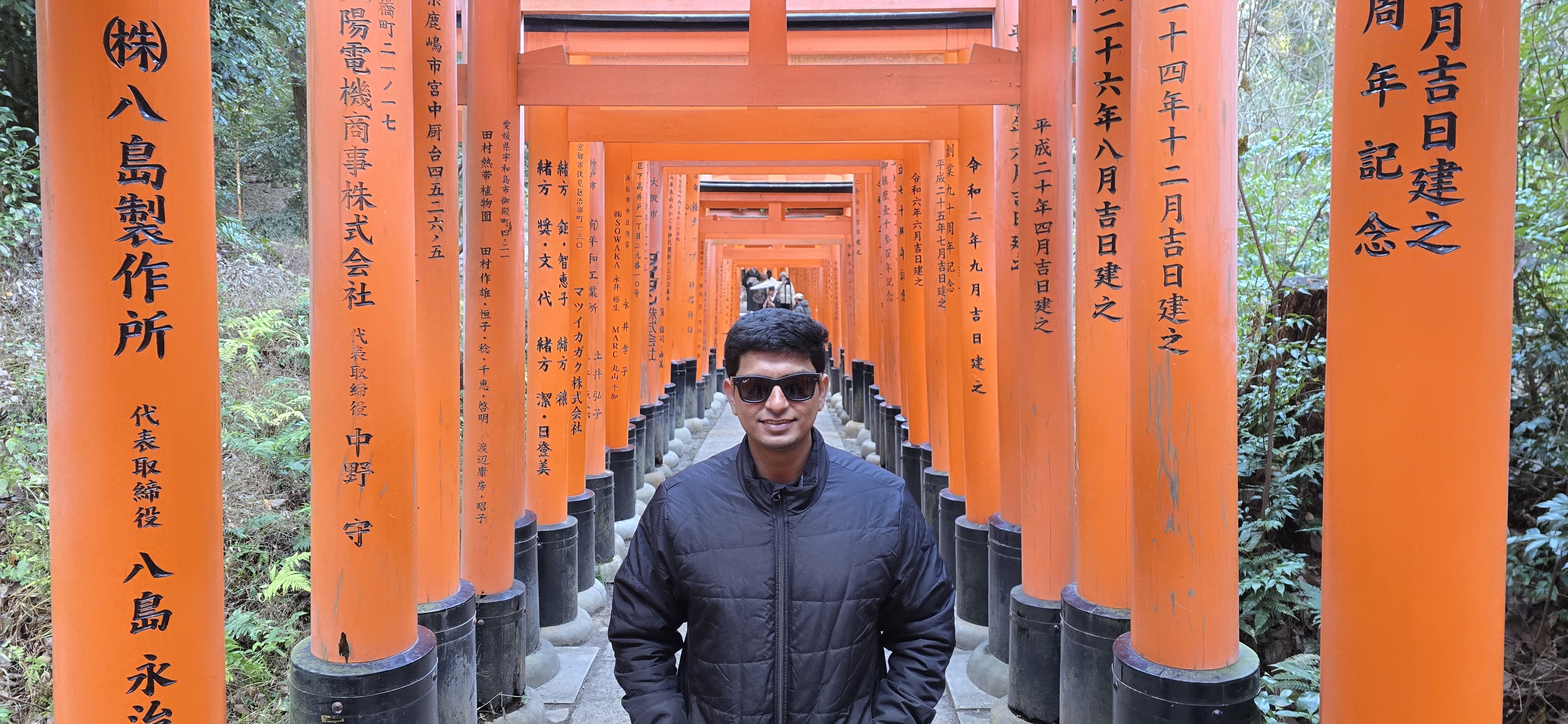
Kyoto got the most days of any city after Tokyo. I did the classics: Kinkaku-ji (the Golden Pavilion), the Zen rock garden at Ryoan-ji, the Arashiyama Bamboo Forest, and Fushimi Inari.
On the 27th we did a day trip to Nara on the JR Nara Line, about 45 minutes from Kyoto. We saw the Nara Deer Park and Todai-ji Temple, and came back to Kyoto in the evening.
Himeji, 29th December
We took a bullet train from Kyoto to Himeji. This is peak travel season before New Year, so reserve your seats. We put our luggage in a locker at the station. The castle is a 10 minute straight walk from the station, you can’t miss it.
We spent three to four hours there, going inside, exploring and taking photos. Honestly two to three hours is enough to see the castle and come back. We had lunch and moved on.
Hiroshima, 29th December
From Himeji, it was about an hour by bullet train to Hiroshima. We got there around 2 PM and took a bus to the Peace Memorial Park and the Peace Memorial Museum. The museum has luggage storage, which was handy. We stayed until the evening and then checked into our hostel.
Walking around the city, you would never guess it was destroyed by an atomic bomb. That stayed with me.
For me, Hiroshima was one of the best parts of the trip.
Miyajima, 30th December
The next day, we went early in the morning to see the A-Bomb Dome. Then we took a tram to the Miyajima ferry, which took about an hour, and then a 30 minute boat ride to the island.
We took the ropeway up Mount Misen to the highest point for the view. It cost me about ₹2,300. Then we visited Itsukushima Shrine, the one with the torii gate in the sea, before heading back to Hiroshima.
My honest opinion: you can skip Miyajima. I didn’t find it that interesting, and the views were cloudy when we went.
Osaka, New Year’s Eve and 1st January
On the 31st we took an early bullet train from Hiroshima to Osaka, checked in in Namba, and went to Osaka Castle. Then Namba and Dotonbori, and some shopping at Yodobashi Camera and Bic Camera (I was looking at iPhones). We finished with the Osaka city view from Abeno Harukas.
We spent New Year’s Eve in Osaka.
Back to Tokyo, 2nd to 7th January
After Osaka, I went back to Tokyo for the last few days before my flight home on 7th January. I spent them around Ueno and Asakusabashi, and did a lot of shopping at Bic Camera.
Collect the stamps
This is my one activity recommendation for Japan. Almost every train station has a free eki stamp. Ask the station staff and they’ll point you to it. Most tourist spots, temples and shrines have stamps too.
Temples and shrines also do goshuin, which are handwritten by the temple itself. Those aren’t free. They cost around ¥200 to ¥500 each. Get a stamp book early in the trip. By the end mine was one of my favorite souvenirs.
What I thought about Japan
- Convenience stores are the best system I’ve seen. 7-Eleven, FamilyMart, Lawson. They’re everywhere and they have everything.
- FamilyMart’s Famichiki is the best fried chicken. I tried a new seasoning every day. I really miss it.
- I really liked the matcha ice cream.
- Trains, city planning, cleanliness, politeness, everything on time. It all just works, and it’s hard not to be impressed.
- The people dress really well. I barely saw anyone overweight, and hardly any bald men either.
- I saw very few children. In the big cities especially. In rural places like Nagano I saw a few more.
- You can see population decline with your own eyes. Trains running with fewer carriages because there aren’t enough passengers. Very little new construction.
- I saw a lot of very old people living alone and still working. That one made me a bit sad.
- I like how they treat old and new. They preserve what matters, for museums or history. For everything else, including houses, they tear it down and rebuild. They hold on to the past without being stuck in it.
- Their culture is still very much their own. It’s unique, and they’ve protected it well.
And one more thing, which is harder to say.
I think it would be very hard to integrate into Japanese society as a foreigner. Nobody will be rude to you. They’ll accept you, they won’t push you out. But getting into their circles as an adult feels close to impossible. I think you’d end up interacting with people only for work, and be lonely the rest of the time. That’s how it felt to me, anyway.
So would I go back as a tourist? Definitely. Would I move there to work on my own? Probably not, unless I had family or relatives there.
Coming back
Japan was my first time outside India, and I think it set the bar for every trip after. Spain later showed me a warmer, louder kind of society. Japan showed me what it looks like when everything works on time. I’m still not sure which one I’d pick.